Why some women feel short of breath after a meal, from a full stomach and acid reflux to food allergies and heart problems, and the signs that need help now.
Shortness of breath after eating has a few possible causes. A big meal, or a belly full of gas, can make it harder to breathe. People with lung disease feel that most. A hiatal hernia can press on your lungs. A severe food allergy can narrow your airways, sometimes in minutes. And in women, a heart attack can bring shortness of breath, with or without chest pain. Get help right away if it hits all at once. Do the same if it comes with chest pain, blue lips or a swollen throat.
Why You Can Feel Short of Breath After a Meal
Doctors call shortness of breath dyspnea. It is the feeling that you cannot get enough air. It can feel like:
- You cannot pull in enough air
- Your chest is tight
- You have to work harder to breathe
- You need to force a deep breath
It can come with a cough, fast breathing, a fast heartbeat or wheezing. Wheezing is a high sound when you breathe out.
Only You Can Judge It
There is no set line for breathing trouble. Some people feel breathless on the stairs and have no health problem at all. Others have serious lung disease and never feel short of breath. Only the person who feels it can say it is there. So trust yourself here.
Short Spells and Long Spells
Doctors also sort it by how long it lasts. The sudden kind comes on fast and lasts hours to days. The long kind lasts weeks or more, or keeps coming back. Your doctor will ask how long you have had it, when it began, and what makes it worse. So if it follows your meals, note which meals, and how long it lasts.
The Most Common Causes
Heart, lung and airway problems are the most common causes. Your heart and lungs work as a team. They bring oxygen into your blood and carry carbon dioxide out. Anything that raises your need for oxygen can leave you short of breath.
Worry, extra weight, low iron and too little exercise can do it too. And some causes are tied to eating. Those are a full stomach, a hiatal hernia and a food allergy.
How a Full Stomach Can Affect Your Breathing
What you eat, and how much, can change how you breathe. People with lung disease feel it most.
Large Meals and Gas
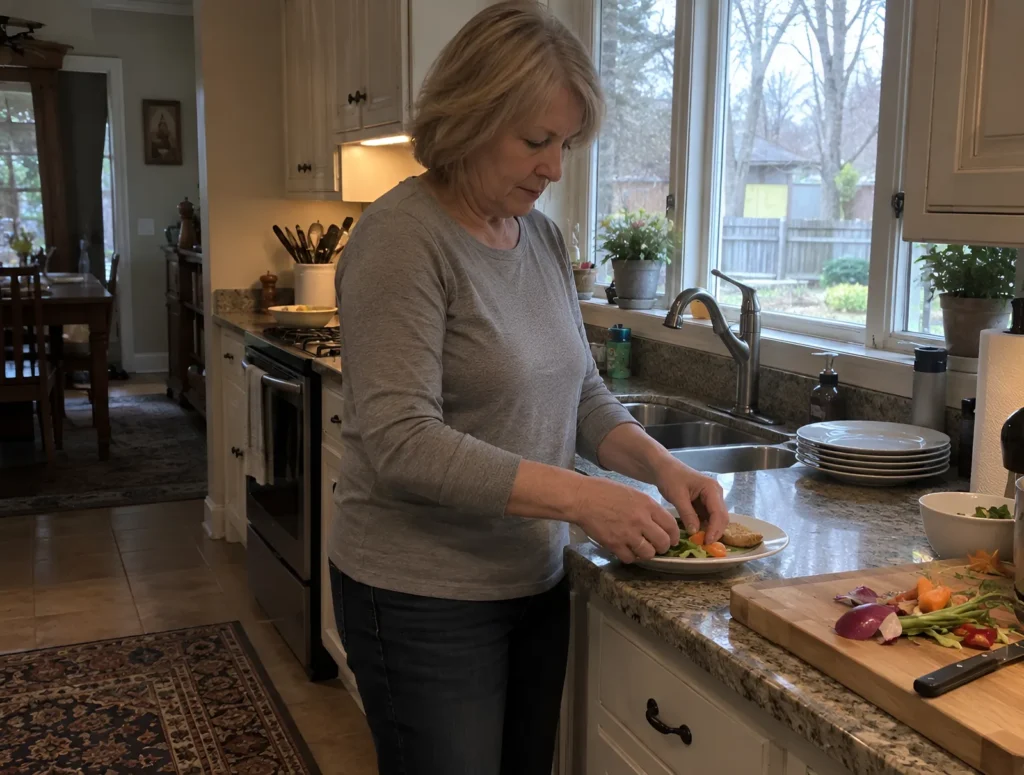
Large meals can make breathing feel harder if you have COPD. COPD is a long-term lung disease. It covers emphysema and long-term bronchitis. Foods that bring gas or bloating add pressure. That can make breathing harder too. Think of your lungs and your stomach as neighbors who share a wall.
Smaller meals help in a simple way. They leave room for your diaphragm to move. That is the muscle between your chest and your belly. When it can move freely, your lungs fill and empty more easily. Do big meals leave you sleepy as well? Read why you may feel tired after eating.
Keep Your Breathing Muscles Strong
Breathing takes more energy when you have COPD. Enough protein and enough good calories keep those muscles strong. Good protein comes from milk, eggs, cheese, meat, fish, poultry, nuts, and dried beans or peas.
Carbs and Carbon Dioxide
Your body uses oxygen to turn food into energy. It also makes carbon dioxide, a waste gas you breathe out. Carbs make more of that gas for the oxygen used. Fat makes the least.
So for people with COPD, fewer carbs and more fat may make breathing easier. But your care team should build a meal plan just for you. So make any change with your doctor, or with a dietitian.
If You Do Not Have Lung Disease
Breathlessness after meals is still worth a look. Many causes are not dangerous, and many are easy to treat. But new breathing trouble, or trouble that is getting worse, can be a sign of something serious. So call your doctor about any breathing trouble.
Hiatal Hernia and Acid Reflux
A gut problem can leave you short of breath too. A hiatal hernia is one of the listed causes.
What a Hiatal Hernia Is
In a hiatal hernia, the top of your stomach pushes up into your chest. It slips through an opening in your diaphragm. It is common, and more common with age. In the U.S., it affects about 20% of people. That rises to 50% of people over 50, 60% over 60 and 70% over 70. Most are not serious. And many cause no signs at all.
The Signs
When a hiatal hernia does cause signs, they are most often signs of acid reflux.
- Heartburn, a burning feeling in your chest, often after eating
- Chest pain that feels like heart pain, but is not
- Feeling full soon after you start eating
- Burping, or food and acid coming back up
- Trouble swallowing
- A sore throat or a hoarse voice
A hernia can also leave you short of breath, if it presses on your lungs. It can bring nausea, and pressure or pain high in your belly or low in your chest. Those signs are more likely with a larger hernia of a less common type.
Heart or Hernia?
Pain from a hiatal hernia can feel like chest pain. For some people, it even feels like a heart attack. So if you are in doubt, have the chest pain checked. Do not sit at home and guess.
Treatment
Does your hernia not bother you? Then your doctor may simply keep an eye on it. Medicines can lower the acid in your stomach. Surgery can repair the hernia, and it works about 90% of the time.
Food Allergy: When It Is an Emergency
A severe food allergy can kill. Trouble breathing after you eat is one of its warning signs.
How a Reaction Starts
In a food allergy, your body overreacts to a food. It puts out chemicals, such as histamine. Those chemicals cause the signs. Any food can do it. The most common are eggs, fish, milk, peanuts, shellfish, soy, tree nuts and wheat.
Signs most often start within 2 hours of eating. Sometimes they come later. The key ones are hives, a hoarse voice and wheezing. You may also get:
- Swelling of your eyelids, face, lips or tongue
- Trouble swallowing or breathing, from a swollen throat
- Itching in your mouth, throat, eyes or skin
- Feeling dizzy or faint, or a sense that something bad is coming
- Stomach cramps, diarrhea or vomiting
Anaphylaxis
A severe reaction is called anaphylaxis. It can hit right away, or within two hours of eating. Your airways can narrow, and that leaves you short of breath. Your blood pressure can drop.
Call 911 if a reaction after eating is serious, or if it hits your whole body. Wheezing and trouble breathing matter most. Did a doctor give you an epinephrine pen? Use it as soon as you can, even before you call.
Allergy or Intolerance?
Many people have a food intolerance instead. That most often brings heartburn, cramps, belly pain or diarrhea. Dairy, wheat and corn are common triggers. A true food allergy is far less common. Food allergies can also set off asthma, or make it worse.
Do you think a food is the problem? See an allergy doctor. Anyone who has reacted to a food should see one. And staying away from that food works best.
Could It Be Your Heart?
Heart problems are among the most common causes of shortness of breath. Heart disease can leave you breathless when your heart cannot pump enough blood. Your body then runs short of oxygen. The heart causes include heart failure, an uneven heartbeat, a heart attack and angina. Angina is chest pain from poor blood flow to the heart.
Heart Attack Signs in Women
Heart disease is the No. 1 killer of women in the U.S. Yet women often blame its signs on something small. Reflux, the flu, getting older. And after a meal, reflux is the easiest thing to blame.
These are the signs to know.
- Pressure, squeezing, fullness or pain in the center of your chest, lasting more than a few minutes, or coming and going
- Pain or discomfort in one or both arms, your back, neck, jaw or stomach
- Shortness of breath, with or without chest discomfort
- A cold sweat, nausea or a light head
Chest pain is still the most common sign in women, as it is in men. Some women feel pressure in the upper back. They describe it as squeezing, or like a rope tied around them. But women may also get shortness of breath, an upset stomach, worry, pain in the shoulder, back or arm, or an odd tiredness and weakness.
Do you have any of these signs? Call 911 right away.
Can You Tell Heart From Stomach at Home?
Not with any confidence. The signs of a heart attack are not always clear, and they can mislead you. Even mild signs can end in death if help comes late. Reflux and hernia pain can feel like heart pain. So when you are in doubt, get checked.
Red Flags and When to See a Doctor
On its own, shortness of breath is most often not dangerous. But sometimes it is a sign of something that can kill.
Get Emergency Help
Go to the emergency room, or call 911, if you have:
- Sudden trouble breathing, or trouble that makes it hard to talk
- Severe breathlessness, when you cannot catch your breath
- Breathlessness that lasts after 30 minutes of rest
- Blue or gray skin, lips or nails
- Chest pain or heaviness
- A fast or uneven heartbeat
- A high fever
- Noisy breathing or wheezing
- Swollen ankles or feet
- A swollen throat, or trouble breathing after eating
See Your Doctor Soon
Book a visit if:
- You get short of breath with light activity, or at rest
- It wakes you at night, or you need to sleep propped up
- You get short of breath just from talking
- Your throat feels tight
- You choked on food, or think you breathed some in
- Your breathlessness is getting worse
- It gets in the way of your day
Other Causes to Rule Out
- Worry and panic attacks
- Extra weight, which means a BMI over 30
- Low iron, which can also leave you feeling tired all the time
- Too little exercise, which makes your muscles work hard on plain daily tasks
- Some medicines, such as statins and beta-blockers
What Your Doctor Will Do
Your doctor will ask about your signs, listen to your lungs and check your blood pressure. A clip on your finger reads the oxygen in your blood. You may need a chest X-ray, blood tests, or tests of your lungs. You may need a heart tracing too, or a scan that shows how well your heart pumps. What comes next depends on the cause.
What Can Help After Meals
Tips for Easier Breathing at Meals
These tips are for people with COPD who get short of breath while eating, or right after.
- Rest just before you eat.
- Eat slowly, and take smaller bites.
- Sit upright while you eat.
- Take breaks between bites, and breathe deeply.
- Eat more of your food early in the day, if you get too tired to eat later.
- Skip foods that give you gas or bloating.
- Eat 4 to 6 small meals a day.
- Do drinks fill you up too fast? Then drink after meals, not with them.
If Reflux Is the Problem
For reflux from a hiatal hernia, these steps help:
- Eat smaller portions. A smaller meal puts less pressure on your stomach.
- Eat less fat. Rich, fatty meals bring more stomach acid.
- Eat dinner earlier, and stay upright for a few hours after.
- Raise your head at night, and sleep on your left side.
- Quit smoking. It weakens the muscle that keeps acid down.
- Aim for a weight that is healthy for you.
If You Have a Food Allergy
Stay away from the food. When you eat out, ask exactly what is in your meal. When you shop, read the label every time.
Protect Your Lungs
Do not smoke or vape. Stay away from fumes, from very hot or very cold air, and from bad air days. Practice breathing exercises. And work with your doctor on a plan for anything that leaves you short of breath.
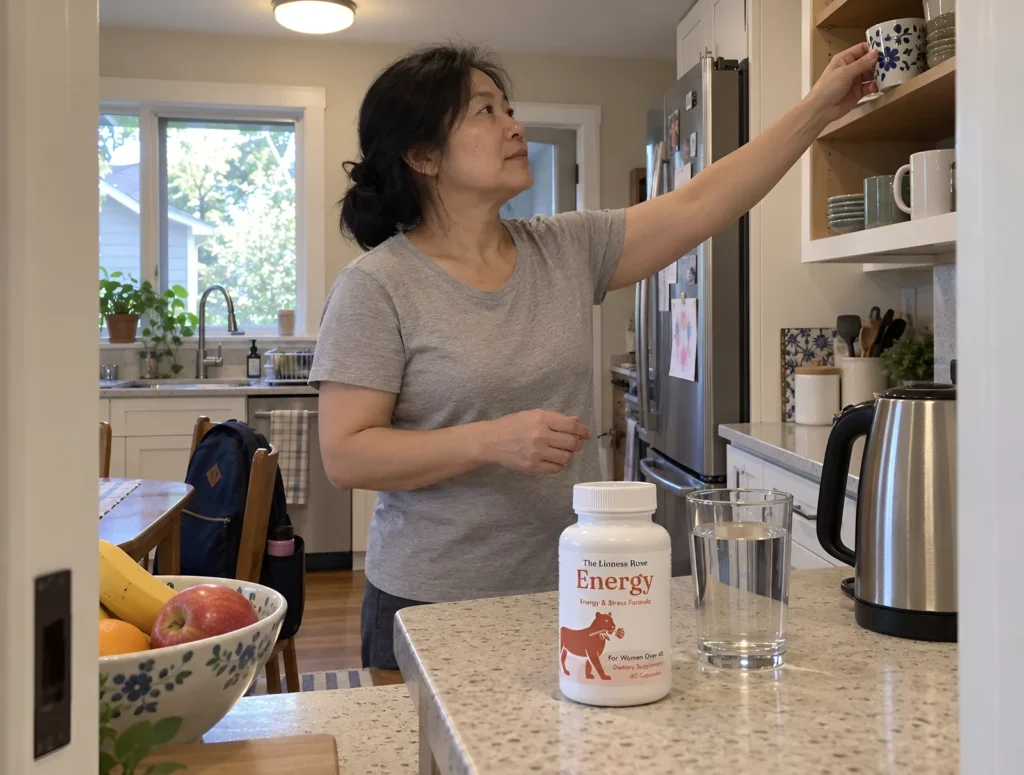
Do you run out of steam long before the day is done? Meet Energy, our caffeine-free morning formula made for women over 40. Vitamins B6 and B12 help reduce tiredness and fatigue. KSM-66 ashwagandha supports a healthy response to occasional stress. No caffeine. No crash. Just two capsules with breakfast, and 60 days to feel it, or it’s free.
How much energy do you have left right now? Our free Energy Check tells you in about 2 minutes. Three quick steps: your hand speed, your legs and how awake you feel.
Common Questions
How do I know if my shortness of breath is heart related?
You cannot always tell at home. A heart attack may bring chest pressure or pain. You may get pain in your arms, back, neck or jaw. You may break out in a cold sweat, or feel sick or light-headed. Women may also feel short of breath, or oddly tired. Call 911 for those signs.
What are the red flags for shortness of breath?
Get help fast for breathing trouble that hits all at once, or makes it hard to talk. Chest pain is a red flag. So are blue or gray lips or nails, and a fast or uneven heartbeat. A high fever, wheezing and swollen ankles count too. So does a swollen throat after eating.
Can shortness of breath be caused by digestive issues?
It can. In a hiatal hernia, the top of the stomach pushes up into the chest. If it presses on the lungs, it can leave you short of breath. And for people with COPD, large meals and gassy foods can make breathing harder too.
What are the top 3 causes of shortness of breath?
Heart, lung and airway problems are the most common. The lung and airway ones include asthma, allergies, COPD and pneumonia. The heart ones include heart failure, an uneven heartbeat and a heart attack. Worry, low iron, extra weight and too little exercise can also cause it.
Sources
- Dyspnea (Shortness of Breath), Cleveland Clinic
- Breathing Difficulty, MedlinePlus, National Library of Medicine
- Hiatal Hernia, Cleveland Clinic
- Food Allergy, MedlinePlus, National Library of Medicine
- Nutrition and COPD, American Lung Association
- Heart Attack Symptoms in Women, American Heart Association