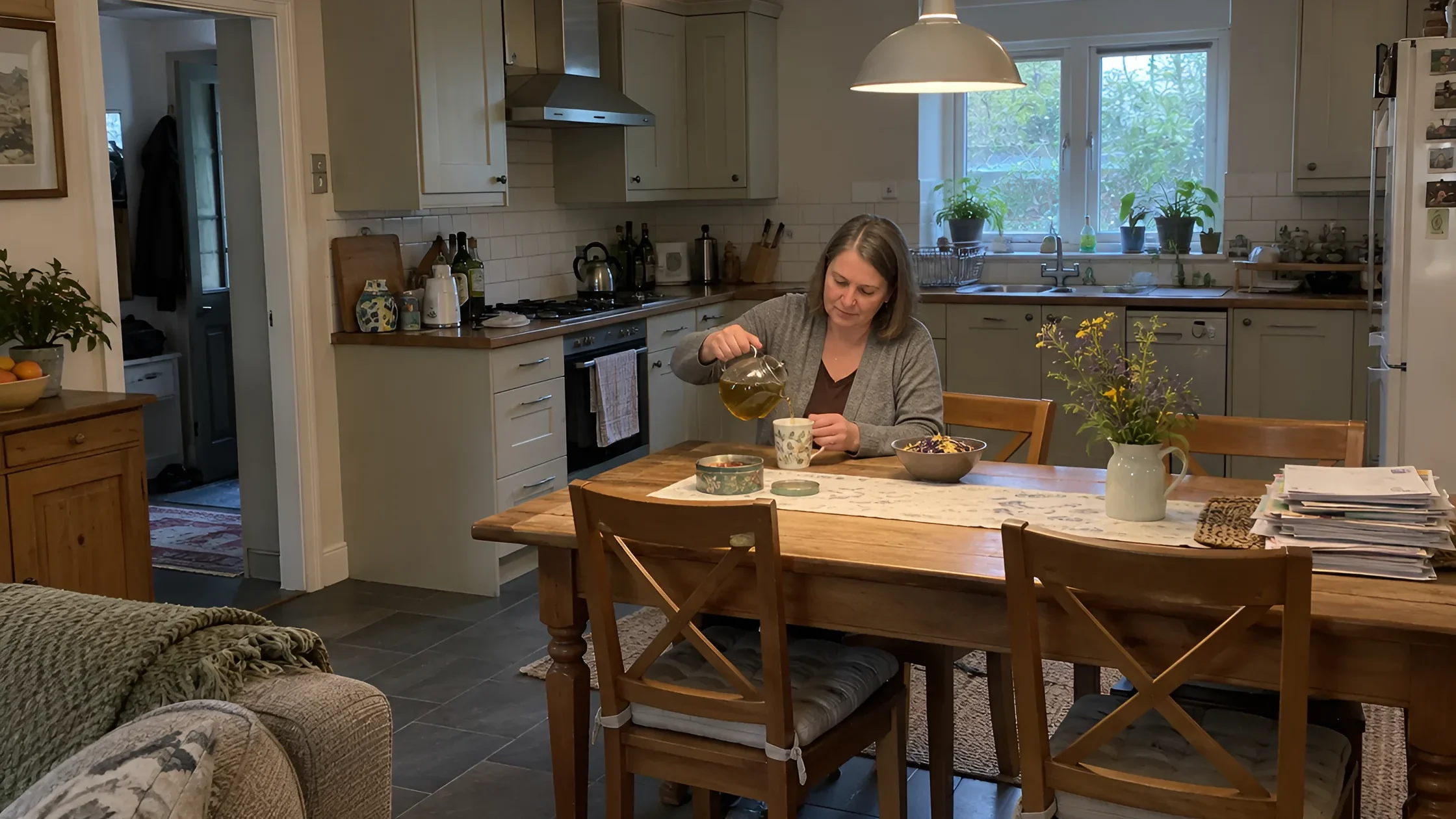
Peppermint, chamomile, fennel and ginger tea for bloating, what the research and Europe's medicine regulator say about each, what helps bloating fast, and when to see a doctor.
Herbal tea for bloating has a long history, and thin research. Europe’s drug agency accepts three herbs for bloating and gas. They are chamomile, fennel and ginger. But that rests on long use, not strong trials. It means at least 30 years of safe use. Peppermint oil pills have some research for IBS, a gut problem. Peppermint tea has very little. Simple habits help you too. A walk, fewer fizzy drinks, slower meals. And see a doctor if your bloating lasts more than a week.
What Causes Bloating
Bloating is a tight, full or swollen feeling in your belly. It happens to almost everyone. It can be mild, or it can really hurt. It most often passes after a while. Your belly may look bigger. You may burp or pass gas more.
Gas
Extra gas is the most common cause. You swallow air, and fizzy drinks add more. But most of the gas in your gut comes from your gut bugs, as they break down carbs. Many people have trouble with some carbs. Think milk sugar, fruit sugar, and the carbs in wheat and beans. When those carbs are not fully broken down, the bugs make more gas.
Eating Habits
Bloating after a meal may be as simple as eating too much, too fast. Salt makes your body hold water. Fat takes longer to break down, so it slows things down.
Hormones
Bloating can come with your period, and with pregnancy. It is common in the years before menopause too. Estrogen makes your body hold water. When estrogen rises and progesterone drops, fluid can build up. These two hormones also speed up or slow down how food moves through your gut. And that can bring gas. Does yours come in the middle of your cycle? Read about ovulation bloating.
Other Causes
- Being backed up
- IBS, or irritable bowel syndrome. Some women with IBS feel bloated on a normal amount of gas.
- Too many gut bugs in the small intestine, called SIBO
- Side effects of pills you take
- Not moving enough
- Stress, and changes in what you eat
- Recent weight gain around your belly
No tea can change most of these. If a food or a health problem is behind your bloating, your doctor can help you find it.
Peppermint Tea
Peppermint is a natural cross between two mints, water mint and spearmint. Mint has been used for the gut since ancient Greece, Rome and Egypt. Today it is sold for IBS, an upset stomach, nausea and more.
What the Research Shows
Most of the research is on the oil, not the tea. The oil is a very strong liquid taken from the leaves and flowers. A 2022 review pooled 10 studies with 1,030 people who had IBS. They took the oil in coated pills. The oil beat a dummy pill for IBS signs and belly pain. It also brought more side effects. But most were mild, like reflux and an upset stomach.
In 2021, a US group of gut doctors backed the oil for IBS signs overall. They noted that coated pills might cut down on reflux and upset stomach.
The tea is made from the leaves. Very little research has looked at the leaf. There is not enough proof to say it helps any health problem. So your cup is a gentler thing than the pills in those trials.
An Upset Stomach
Some products mix the oil with caraway oil. Those may help an upset stomach. But there is no proof that the oil alone does. In some people, it may make an upset stomach worse.
Safety
The tea itself looks safe. No one knows about drinking large amounts of it for years.
The oil can cause heartburn, nausea, belly pain and a dry mouth. Rarely, it brings an allergic reaction.
In food amounts, peppermint is likely safe in pregnancy and while nursing. Little is known about the larger amounts used as medicine. So keep yours to a cup, not a course of pills.
Chamomile Tea
This tea is made from the dried flower heads of the plant. The flowers come from farms, or from the wild.
What Europe’s Drug Agency Says
In the EU, one panel reviews herbal remedies. EU countries lean on its findings. That panel has found the flower can be used for minor stomach and gut trouble. Bloating and mild cramps are on the list.
What Traditional Use Means
That finding rests on what the panel calls traditional use. It means the trials are not strong enough. But the effect makes sense, and people have used the herb this way, safely, for at least 30 years. At least 15 of those years were in the EU. So your bedtime cup has centuries behind it, and not much lab work.
The panel did look at some studies in people. Those hinted at a benefit. But the data were too weak to count. In part, that is because no one held them up against another treatment.
Other Uses
The panel also lists the flower for cold signs. And for minor sores and swelling in the mouth and throat. It comes as a tea to drink, or as steam to breathe in.
Safety
Some people have had bad allergic reactions. Those came after the liquid form touched the inside of the mouth. Are you allergic to this flower, or to other plants in the daisy family? Then do not use these products.
They are mostly for adults and teens over 12. Only some are made for younger children. And see a doctor if your signs last more than a week.
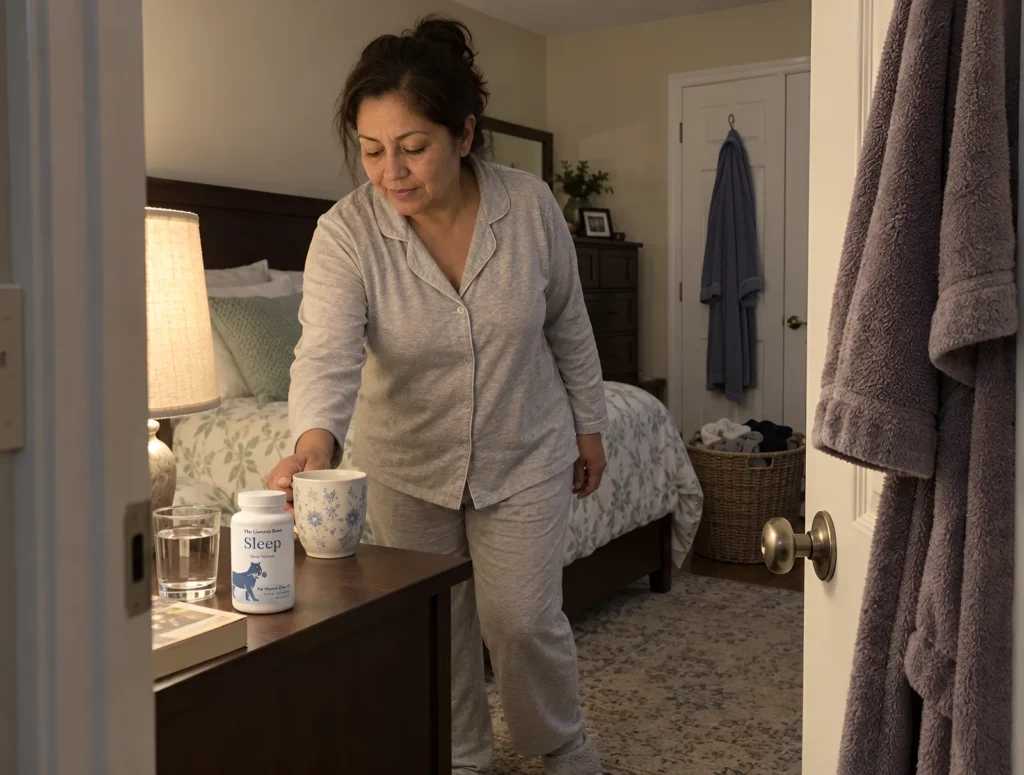
Love a cup of chamomile before bed? It is one of the calming plants in our Sleep formula, next to lemon balm and passion flower, to help you unwind. It also has melatonin, which helps promote a balanced and restful sleep schedule. No sugar gummies. No knock-out pills. Just two capsules before bed, and 60 days to feel it, or it’s free.
Curious how well you really sleep? Take our free Sleep Check. Answer 6 quick questions and see your sleep efficiency in about 30 seconds.
Fennel and Ginger Tea
Fennel
Fennel tea is made from fennel seeds. The seeds are the fruit of the plant. The same panel lists sweet fennel for mild, crampy stomach and gut trouble. Bloating and gas are on that list. This, too, rests on long use. The panel also lists fennel for mild period cramps, and for a cough with a cold.
Trials on fennel are few. In lab tests, fennel extracts and its oil relaxed tight muscle. That makes the long use easy to believe. But a lab test does not show how your tea works in your body.
Do you drink fennel tea after dinner? You are in old company. Fennel is easy on most people. Its most common side effects are a skin or airway allergy. Fennel products can be used from age 4, for 1 to 2 weeks at most. They have not been tested in pregnancy, or while nursing. So the panel says to skip them if you are pregnant or nursing. Want one more herb to know? Read about lemon balm tea.
Ginger
Ginger has one use backed by studies in people. Ginger powder can prevent the nausea and vomiting of motion sickness. Its use for mild, crampy stomach trouble, bloating and gas rests on long use alone.
The panel’s summary covers ginger products, like powders and drops. Not food. For bloating, it says not to use them under age 18. It also says to skip them if you are pregnant, nursing or allergic to ginger. See a doctor or a pharmacist if your signs last more than 2 weeks.
Side effects can include a skin allergy and nausea. Stomach trouble is not common. It hits up to 1 in 100 people.
What Helps Bloating Fast
Most bloating clears up at home. You may need to change how you eat, or move more. Here are the steps you can start today.

Walk
Walking often helps move gas through your gut. So try not to sit for long stretches.
Change What You Drink
Cut back on fizzy drinks, since they add gas. And drink enough water. It helps food move along, and it keeps what you ate from getting too hard to pass.
Slow Down at Meals
Chew well, and stop before you feel full. That full feeling reaches you late, since your food takes a while to land.
Go Easy on Salt and Packaged Food
Salt makes your body hold water. Packaged foods are low in fiber and high in salt and fat. And fat takes longer to break down.
Stay Active
Moving helps your body let go of water. It keeps your bowels moving. It can also head off quick weight gain, which often lands on your belly.
Over-the-Counter Help
Antacids, magnesium, probiotics, psyllium fiber and laxatives each help with some causes. It also helps to steer clear of pills that back you up. But ask your doctor before you stop any pill they gave you.
Find Your Triggers
Some women keep a food journal to see which foods bother them. Eat enough fiber, even though beans and broccoli bring more gas at first. Do you think a food is the cause? A dietitian can help. They may suggest cutting out some foods for a while, such as a low-FODMAP plan. Your gut has its own rhythm, and it takes weeks to read.
Notice Patterns
Watch what sets your bloating off. Small changes go a long way. Adjust what you eat, stay active, and slow down at meals.
Can a Tea Clean Out Your Gut?
Some teas are sold to cleanse your body, or your colon. These plans may use herbs, fasting, juices, or laxatives and enemas to empty the colon. Some are sold in stores. Some are offered at health centers.
What the Research Says
Only a few studies have tested these plans in people. And those were weak. A 2015 review found no strong research that these diets pull toxins out of your body. So you can save your money. Your liver and your kidneys already do that job for you. A 2017 review found that juice and cleansing diets can drop weight fast. That is because you eat less. But the weight tends to come back once you eat normally again.
The Risks
- The FDA and the US trade agency have acted against companies selling cleansing products. Some had hidden ingredients that may pose a serious health risk. Others made false claims about treating serious diseases.
- Laxatives can cause diarrhea. That can leave you short of water and nutrients.
- Colon cleansing can have side effects, and some are serious. The risk is higher if you have had gut disease or colon surgery. Same if you have had bad piles, kidney disease or heart disease.
- Juice that was not heat-treated can make you sick.
- Going days on water and herbal tea alone can upset the salts in your blood. That can be risky.
- Diets that cut calories hard rarely keep weight off. And they may leave out things your body needs.
Do you have diabetes? Then stick to the eating plan from your care team. And talk to your doctor before you start any cleanse.
When Bloating Needs a Doctor
Bloating is most often harmless. But see your doctor if it:
- Lasts more than a week
- Really hurts
- Comes with fever, vomiting, bleeding, weakness or weight loss you cannot explain
Get it checked if your bloating does not go away, or if it gets worse. You know your own belly better than any list. Bloating that hangs on is sometimes linked to something serious. That includes swelling in your stomach or gut. It also includes some cancers of the ovary, the colon and the pancreas.
Tests and Help
A breath test can screen for a few gut problems. A dietitian can help you spot food triggers. Do you have SIBO? Then the right probiotics may help. Biofeedback is a mind-body therapy. It can teach you to relax, and to retrain how your body works.
If You Use Herbal Tea
The herbal summaries set their own time limits. With chamomile, see a doctor if signs last more than a week. With ginger, the limit is 2 weeks. Fennel products are meant for 1 to 2 weeks at most.
Do you take any pills? Then talk with your doctor first. Some herbs and drugs mix badly. And those summaries cover herbal medicines, not teas sold as food.
Common Questions
Which herbal tea is best for bloating?
The proof is thin for every tea. Europe’s drug agency lists chamomile, fennel and ginger. That rests on 30 years of safe use, not on strong trials. Peppermint oil pills have some research for IBS. The tea has very little. See a doctor if your bloating lasts over a week.
What reduces bloating fast?
A walk helps gas move through your gut. So do not sit for long. Cut back on fizzy drinks and salt. Chew well, and stop before you are full. Store shelves offer antacids, probiotics and fiber. See a doctor if your bloating lasts a week.
What drink relieves bloating fast?
None of our sources names a drink that works fast. Water helps food move along, so drink enough. Chamomile, fennel and ginger have a long use in Europe. But strong trials are missing. Skip fizzy drinks, since they add gas. And peppermint can bring heartburn.
What is the best tea to clean your gut?
There is little good research on cleanses. A 2015 review found no strong proof that they pull toxins out of you. Some cleansing products had hidden ingredients. And the laxatives in some bring diarrhea and loss of water. Ask your doctor before you try one.
Sources
- Bloated Stomach, Cleveland Clinic
- Peppermint Oil, National Center for Complementary and Integrative Health
- Matricariae Flos (Chamomile Flower), European Medicines Agency
- Foeniculi Dulcis Fructus (Sweet Fennel Fruit), European Medicines Agency
- Zingiberis Rhizoma (Ginger), European Medicines Agency
- Detoxes and Cleanses: What You Need To Know, National Center for Complementary and Integrative Health