
What inositol is, what studies found about weight loss, who seems to benefit most, and what to know before you try it.
Inositol for weight loss sounds like a dream: a simple powder that melts pounds. The truth is smaller, but it is real. Inositol is a kind of sugar your body makes, and you can buy it as a supplement too. A review of 15 trials found it cut BMI by 0.41 points on average. If you are 5 feet 5 inches tall, that is about 2.5 pounds. Women with PCOS, a common hormone problem, and extra weight saw the most change.
What Is Inositol?
You may have seen it on a shelf next to the vitamins. So what is it? Here is the short and simple version.
It is a form of sugar. Your body makes it and uses it to build your cells. Your cells need it to grow. You also get it from food, like meat, fruit, corn, beans and grains. You eat some every day. A typical U.S. diet has about 1 gram a day.
You may see it called vitamin B8. But it is not really a vitamin.
It may affect insulin, a hormone that helps your body turn food into energy. It may also affect some chemical messengers in your brain. So why would you want it for weight? Keep reading.
The Names on the Label
As a supplement, it comes in a few forms:
- Myo-inositol
- D-chiro-inositol
- Inositol hexaphosphate
Some products mix more than one. Keep these names handy. In the research below, the forms did not all work the same way. Think of cousins in one family: the same last name, but not the same habits.
Why People Take It
Cleveland Clinic lists many reasons people use it.
- Metabolic syndrome, a group of risks like extra belly fat and high blood sugar
- The signs of PCOS
- A lower risk of diabetes in pregnancy
- High cholesterol
- Helping the body handle insulin
- Low mood
For many of these uses, the clinic says more research is needed. Weight loss is not on its list. But extra weight, insulin and PCOS often go together. That is where the weight question starts.
Why Inositol Is Linked to Weight Loss
To see why women try inositol for weight loss, you need to know two things. The first is insulin. The second is PCOS.

Insulin and Blood Sugar
Insulin is a hormone. It helps turn the food you eat into energy.
Sometimes your cells stop answering it the normal way. This is called insulin resistance. Think of a doorbell your cells stop hearing. Your body keeps ringing, so the level in your blood climbs. Over time, this can lead to type 2 diabetes.
Some earlier studies found that inositol helps cells take in sugar. It seems to make them more sensitive to insulin. So researchers wanted to know if it could help people with extra weight. In 2022, one team wrote that this was still not fully clear.
The PCOS Connection
PCOS stands for polycystic ovary syndrome. It affects 1 in 10 women who can have children. It is a problem with your hormones.
Signs of PCOS can include:
- Periods that come late, come rarely or stop
- Too much hair on the face, chin or body
- Acne
- Thin hair on your scalp
- Weight gain, or trouble losing weight
Does that list sound like you? A doctor can check. Many women with PCOS have insulin resistance. It is more common if you have extra weight or move too little. It is also more common if you eat in unhealthy ways or have diabetes in the family. With PCOS, losing weight may help your body use insulin better.
Since it may affect insulin, much of the research on it has been in women with PCOS. In the main review below, 10 of its 15 trials were in women with PCOS.
What the Research Shows
One small study can fool you. So the best place to start is a review that pools many trials.
A Review of 15 Trials
In 2022, a team pooled 15 controlled trials on inositol and BMI. In a controlled trial, one group takes the supplement and one group does not. Then the two groups are compared. The trials had 891 adults, and 843 of them were women.
BMI stands for body mass index. It compares your weight with your height. Here is what the review found, in pounds you can picture. On average, BMI dropped by 0.41 points. If you are 5 feet 5 inches tall, that is about 2.5 pounds. We did that math with the standard BMI formula.
Why the Results Varied
The trials were not all alike. They lasted from 6 to 48 weeks. They used different doses and forms. And the people in them were not the same age or the same weight at the start.
The form mattered. The myo form cut BMI by 0.66 points, about 4 pounds at 5 feet 5 inches. The D-chiro form did not cut BMI at all. With that form, BMI went up a little.
What the Authors Concluded
The team said the effect was small in daily life. They said it may not work as a treatment on its own. They suggested it as an add-on, next to a weight loss diet and exercise.
They also named the limits of their work. The total number of people was small. And there were too few trials to look at body weight or waist size.
Inositol for Weight Loss With PCOS
If you have PCOS, here is the better news. Most of the research comes from women like you, and the results are a little stronger.

Extra Weight Made a Difference
In the 2022 review, the results changed with body weight. In women with PCOS and extra weight, BMI fell by 0.78 points. That is about 4.7 pounds at 5 feet 5 inches. In women with PCOS who were not obese, BMI barely moved.
A 2023 Review of 26 Trials
A 2023 review looked only at women with PCOS. It pooled 26 trials with 1,691 women. Some trials compared inositol with a fake pill. Others compared it with metformin, a drug for diabetes.
Compared with the fake pill:
- Women on inositol were nearly twice as likely to have regular periods.
- BMI fell 0.45 points more, about 2.7 pounds at 5 feet 5 inches.
- Blood sugar fell more.
It also did no worse than metformin on most of the things the review checked. The authors called it a safe treatment for PCOS that works.
What the PCOS Guide Says
A new PCOS guide for doctors came out in 2023. It was made by 39 groups of health workers and patients from 71 countries. It says women with PCOS could try inositol, in any form, based on what they want. So if you have PCOS, it is an option to talk over with your doctor. It notes that the harm is limited. It also says it may help some signs of how your body uses sugar and fat.
But the guide says the real benefits are limited, even for extra hair and weight. For extra hair and belly fat, it says doctors should look at metformin first. It adds that metformin upsets the stomach more often.
What If You Do Not Have PCOS?
Maybe you don’t have PCOS, and you just want the scale to move. Here the research gets thin.
Few Trials, No Clear Drop
In the 2022 review, only 5 of the 15 trials were outside PCOS. Two were in women with metabolic syndrome after menopause. The other three were in people with high blood sugar, diabetes or good health.
Outside PCOS, the review did not find a clear drop in BMI. Only one trial looked at healthy people, and it showed no clear drop either. Your starting weight mattered too. In people who began at a normal BMI, it made almost no change.
That does not mean it can’t help you. It means nobody has shown it yet. On a hormone pill? Read if progesterone makes you gain weight.
Metabolic Syndrome
Metabolic syndrome is a group of risks. They include extra belly fat, high blood pressure and high blood sugar. It raises your chances of diabetes, heart disease and stroke. The clinic says inositol may help people with it. Some research suggests better blood pressure, cholesterol and blood sugar. But more research is needed.
Could It Be PCOS?
Most women find out they have PCOS in their 20s and 30s. Often it is when they have trouble getting pregnant. But PCOS can start at any age after puberty. Your risk may be higher if you have obesity. It may also be higher if your mother, sister or aunt has PCOS.
No single test shows PCOS. Your doctor may ask about your health, check you and order tests. First, other causes are ruled out. Then your doctor may say you have PCOS if you have at least two signs. These include irregular periods, extra hair, acne and high levels of male hormones.
Side Effects and Safety
You found a bottle online. It has great reviews and a pretty label. Before it lands in your cart, here is what to know. You deserve the good and the not so good.
Mild Side Effects
The clinic says doctors see inositol as safe in low doses for up to 10 weeks. Side effects tend to be very mild at low doses. Some people get:
- Diarrhea
- Nausea
- Stomach pain
- Tiredness
- A headache
- Feeling dizzy
That note covers up to 10 weeks. It does not say what happens after that. If you feel unwell, talk to your doctor.
In the 2023 review, the authors called it safe for women with PCOS. The PCOS guide also notes that the harm is limited. And compared with metformin, it upsets the stomach less often. But the 2022 review said there is still little data on the safety of the myo form.
Check the Label
The guide does not back any one type, dose or mix yet, because good research is lacking. So read the label. You want to know which form is inside, and how much. Then you know what you are really taking.
Talk to Your Doctor First
Don’t stop a medicine your doctor prescribed. You can add it to a treatment plan. It does not replace one.
Talk to your doctor before you start if you:
- Take a prescribed medicine
- Are pregnant
- Want to use it for a health problem, like PCOS or low mood
Always tell your doctor what pills and powders you take. The PCOS guide asks women on inositol to do the same.
Before You Try Inositol
Thinking about it? Start here.
- See your doctor if you have signs of PCOS, like missed periods or extra hair.
- Ask about blood tests. They can check your hormones and test you for diabetes.
- Keep good food and daily movement in your plan. With PCOS, losing 10% of your weight can help your periods come more regularly. For a 150-pound woman, that is 15 pounds.
- Expect a small change. In the reviews, it was a few pounds.
- If you try it, follow the label and tell your doctor.
- Watch for side effects like diarrhea, nausea or a headache.
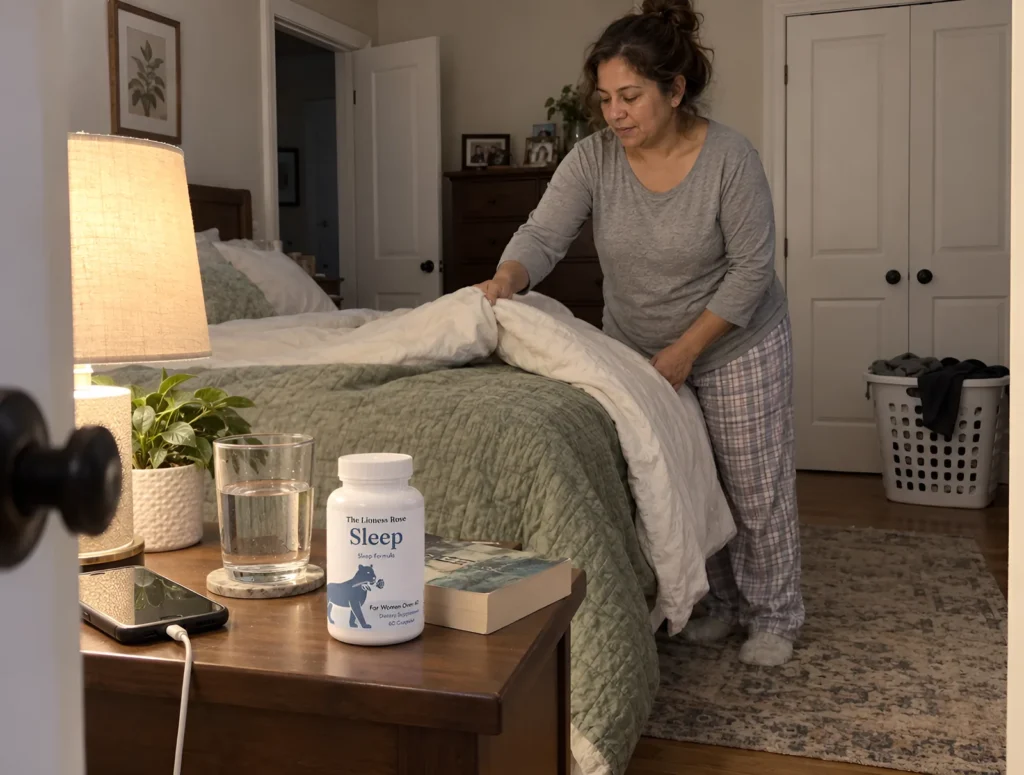
Inositol also has a spot in our Sleep formula. It is one of 14 named ingredients in its bedtime blend. Chamomile, passion flower and lemon balm are in there too. They are calming plants that help you unwind. Then add 10 mg of melatonin, which helps promote a balanced and restful sleep schedule. That is a night formula made for women over 40. No knock-out pills. Just two capsules before bed, and 60 days to feel it, or it’s free.
Curious how your nights really add up? Take our free Sleep Check. Answer 6 quick questions. In about 30 seconds, you see your sleep efficiency. No sign-up.
Common Questions
How much weight can you lose with inositol?
In a 2022 review of 15 trials, inositol cut BMI by 0.41 points on average. If you are 5 feet 5 inches tall, that is about 2.5 pounds. In women with PCOS and extra weight, the drop was bigger, about 4.7 pounds. Results varied a lot from trial to trial.
Which inositol is best for weight loss?
In the 2022 review, the myo form cut BMI the most. The D-chiro form did not cut it at all. But the 2023 PCOS guide does not back any one type, dose or mix yet, because good research is lacking. Your doctor can help you decide if any form fits you.
Can you take inositol for weight loss without PCOS?
You can, but there is little research to show it helps. In the 2022 review, 10 of 15 trials were in women with PCOS. In the other groups, BMI did not drop in a clear way. If you still want to try it, talk to your doctor first, above all if you take medicine.
Is there a downside to taking inositol?
Some people get mild side effects, like diarrhea, nausea, stomach pain, tiredness, a headache or feeling dizzy. It does not replace a medicine your doctor prescribed. Read the label to see which form you get. And tell your doctor about any supplement you take, and talk to them first if you are pregnant.
Does inositol help you lose belly fat?
The research we read does not show that. The 2022 review had too few trials to look at waist size. For belly fat in women with PCOS, the 2023 guide points to metformin, a drug for diabetes, before inositol. Your doctor can help you find a plan that fits you.
Sources
- Inositol, Cleveland Clinic
- Inositol supplementation and body mass index: A systematic review and meta-analysis of randomized clinical trials, Obesity Science & Practice, 2022
- Inositol is an effective and safe treatment in polycystic ovary syndrome: a systematic review and meta-analysis of randomized controlled trials, Reproductive Biology and Endocrinology, 2023
- Recommendations From the 2023 International Evidence-based Guideline for the Assessment and Management of Polycystic Ovary Syndrome, The Journal of Clinical Endocrinology & Metabolism, 2023
- Polycystic ovary syndrome, Office on Women’s Health
- BMI Frequently Asked Questions, Centers for Disease Control and Prevention