Why some women get aches, tiredness, nausea or a low fever before their period, how to tell it from the real flu, and what helps.
Period flu is the name women give the flu-like week before a period. Your body aches. Your head hurts. You feel sick to your stomach, and worn out by 4 PM. But it is not the flu, and doctors do not use it as a diagnosis. It is a kind of PMS. Your hormones drop before your period, and other chemicals upset your gut. Most women feel better once the period starts. Good habits, a pain pill and a symptom diary all help.
What Is Period Flu?
Period flu is not a real flu. No virus causes it. And you cannot pass it to anyone. Doctors call it a type of premenstrual syndrome, or PMS. It just feels like the flu.
Common Signs
If you get period flu, you may notice:
- Body aches
- Tiredness
- Headaches
- Nausea and vomiting
- Diarrhea
- A low fever
Other PMS signs come along with these. You may get bloating, tender breasts, a sore back, food cravings, poor sleep or mood swings. Some women feel clumsy. Some find noise and light harder to take.
When It Happens
PMS starts after you let go of an egg, in the second half of your cycle. It is unusual to feel it for the whole two weeks before your period. For most women, it starts a few days before, and goes once the period begins.
How Common Is It?
No one has counted the flu-like kind of PMS. But PMS itself is very common. Over 90% of women get some signs before their period. As many as 3 in 4 say they have had PMS at some point. For most, it is mild.
A small number of women have a severe form called PMDD. It hits less than 5% of women who can have children. It brings strong mood signs, like deep sadness or worry.
Who Gets It More
PMS may hit harder if you live with a lot of stress. The same goes for women with a personal or family history of depression. It can also get worse in the late 30s and 40s, as menopause gets closer. So your week may look nothing like your sister’s.
Why Your Period Can Make You Feel Sick
No one knows the exact cause of period flu, or of PMS. But two things seem to play a big part.
Falling Hormones
A cycle runs about 28 days. Anywhere from 21 to 35 days is normal. Estrogen and progesterone are the two hormones that run it. They rise before and after you let go of an egg. Then, if you do not get pregnant, they drop just before your period.
Researchers think PMS starts in the days after the egg comes out. That is when these hormones begin to fall fast. The drop can bring headaches, mood swings, tiredness and the rest. And it may hit some women harder than others.
Prostaglandins
Before your period, the lining of your womb puts out chemicals called prostaglandins. They make the womb squeeze so it can shed that lining. Those squeezes are the cramps you feel.
These chemicals do more than cause cramps. They can also bring diarrhea, nausea and sometimes a low fever. So that is why a period can feel like a stomach bug.
Their levels rise right before your period. They drop once it starts. That is why cramps tend to ease after a few days.
Cramps and Aches
Cramps can bring an aching or throbbing pain low in your belly. You may feel it in your hips, your lower back and your inner thighs. Some women get dizzy, or get headaches too. In most cases the pain starts a day or two before your period. Then it eases within two days. Cramps with no period at all? Read about cramps but no period.
Your Blood Sugar
Swings in blood sugar can bring food cravings, a short fuse and mood swings. Steady blood sugar can ease PMS. So what you eat matters here.
Period Flu or the Real Flu?
At first they can be hard to tell apart. A few clues help.
Signs of the Real Flu
The flu is an illness caused by a virus. It spreads from person to person. Its common signs are:
- Fever, or feeling feverish and chilled
- Cough
- Sore throat
- Runny or stuffy nose
- Muscle or body aches
- Headaches
- Tiredness
Flu signs most often come on fast. The fever often lasts 3 to 4 days. Body aches, a cough and a tight chest are common, and they can be severe. Not everyone with the flu runs a fever. Vomiting and diarrhea can happen too, but more in children than in adults. A cold is different. It comes on slowly, and a fever is rare.
How They Differ
- Timing: period flu lands in the days before your period, month after month. The real flu does not follow your cycle.
- Nose and throat: the real flu often brings a cough, a sore throat or a stuffy nose. Those are not on the lists of PMS signs.
- Fever: period flu may bring a low fever at most. A high one points to something else, like an infection.
- Relief: period flu often eases once your period starts.
When to Think It Is Not PMS
A cough, a sore throat or a high fever may mean a real infection. Most people with the flu get better in a few days to less than two weeks. But some get problems like pneumonia. The risk is higher for people 65 and older, and for pregnant women. It is higher with asthma, diabetes or heart disease too. So call your doctor if you feel very sick, or you are not getting better.
When It Could Be Something Serious
Most period flu is mild. But a few signs need care right away.
Toxic Shock Syndrome
Toxic shock syndrome is rare. It can also be deadly. A poison made by some germs causes it. The first cases were in women using tampons during their periods. Today, fewer than half of cases are linked to tampons. It can follow a skin infection, a burn or surgery too. And leaving a tampon in for a long time raises the risk.
Get help right away if you use tampons and have:
- A high fever, sometimes with chills
- A red rash that looks like a sunburn
- Vomiting or diarrhea
- Muscle aches or headaches
- Fainting, dizziness or muddled thinking
In the hospital, doctors take the tampon out. They give antibiotics for the infection. And they help your organs keep working.
You can lower your risk from tampons:
- Skip the most absorbent ones.
- Change your tampon often, at least every 8 hours.
- Use tampons only part of the time during your period.
Severe Mood Signs
PMDD can bring severe low mood, worry and mood swings before a period. Some women even have thoughts of suicide. Does that happen to you? Talk to a doctor, or to a counselor. And if you are in crisis, call or text 988, the Suicide and Crisis Lifeline.
Other Health Problems That Flare Up
About half of women who need help for PMS live with another health problem too. It can get worse in the days before a period. These include:
- Depression and worry
- Chronic fatigue syndrome
- Irritable bowel syndrome, or IBS
- Bladder pain syndrome
Low mood and worry are the most common. Their signs can look a lot like PMS. PMS can also make asthma, allergies and migraines worse.
How to Ease Period Flu
Healthy habits make a real difference here. They are good for you all month, not only before your period.
Eat to Keep Your Blood Sugar Steady
- Choose whole grains, like whole-wheat bread and brown rice, over sugar.
- Eat smaller meals, with healthy snacks in between.
- Eat plenty of fruits, vegetables, lean protein, nuts and seeds.
- Add foods with omega-3 fats.
- Eat less animal protein and less saturated fat.
- In the two weeks before your period, cut back on caffeine, salt and sugar.
Get Calcium From Food
Calcium may help PMS signs, above all the mood ones. Good sources are low-fat dairy, foods with added calcium, and nuts and seeds.
Move Your Body
Exercise helps with PMS signs like tiredness, low mood and a foggy head. Aim for about 30 minutes a day, 5 days a week. That adds up to 150 minutes a week. Brisk walking, running and biking all count.
Use Heat
A heating pad on your belly eases cramps. So does a hot water bottle on your lower back. A gentle rub of the same spots may help too. So can extra rest.
Sleep Well
Plenty of sleep helps if PMS leaves you tired, cranky or unable to focus. Aim for at least 7 hours a night. About 8 hours is the advice for these days.
Want to see how well you really slept? Take our free Sleep Check. Six quick questions, about 30 seconds, and you see your sleep efficiency.
Lower Your Stress
Less stress can ease the low mood, the worry and the mood swings. Spend time outdoors, write in a journal, or talk with friends. Yoga, massage and quiet breathing help some women.
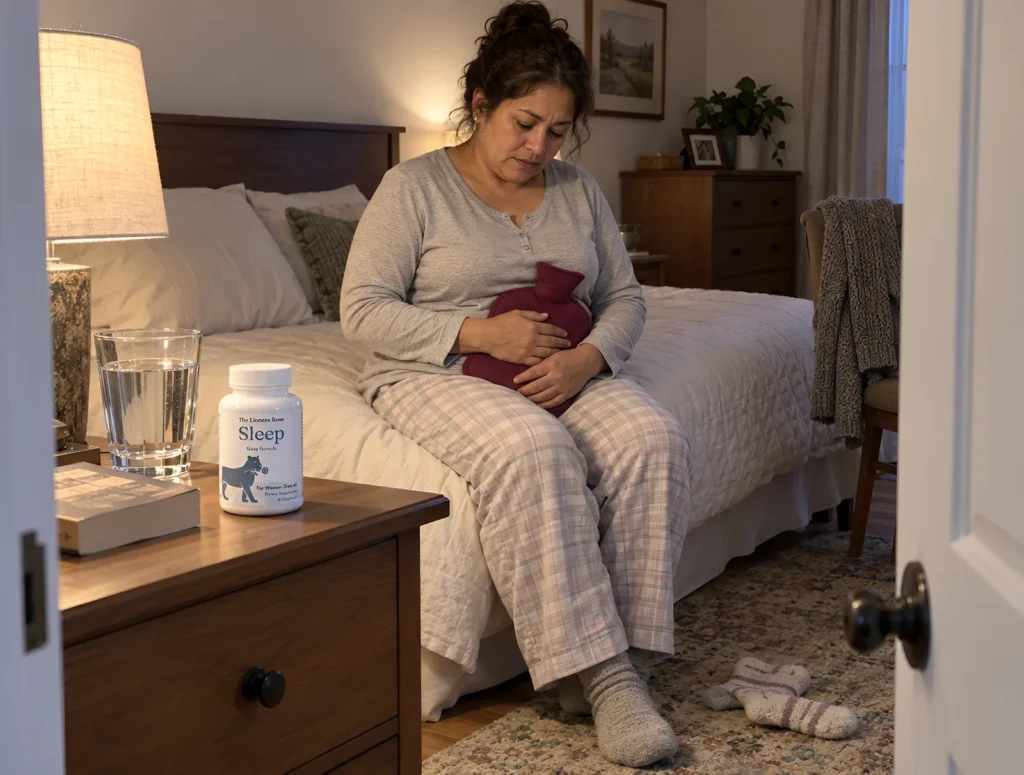
Does period week steal your sleep? Our Sleep formula can be part of your wind-down. It has chamomile, passion flower and lemon balm, calming plants that help you unwind. It also has ashwagandha and GABA to help foster a sense of relaxation before bed. No sugar gummies. No knock-out pills. Just two capsules before bed, and 60 days to feel it, or it’s free.
Skip Cigarettes and Alcohol
Women who smoke report more PMS signs, and worse ones. Quitting helps. Skipping alcohol can ease cramps too.
Vitamins, Minerals and Medicines
Are healthy habits not enough? Then other options may help. Talk to your doctor before you start any of them.
Pain Pills
Some pain pills, called NSAIDs, block prostaglandins. They include ibuprofen and naproxen, and you can buy them at any drug store. They can ease cramps, body aches and diarrhea. Aspirin may help with cramps and headaches too.
Some women take one just before their period starts. They find it cuts their pain and their bleeding. But every medicine has risks. So talk to your doctor or nurse about them.
Hormonal Birth Control
Birth control with hormones keeps your hormone levels steady. It also lowers prostaglandins. It comes as the pill, the patch, the ring and the shot. The longer-lasting kinds are the implant and hormone IUDs. It may help the body signs of PMS. But it can make other signs worse. So you may need to try a few before one fits.
Other Medicines From Your Doctor
Some pills for low mood can ease the mood side of PMS, when nothing else does. Water pills may ease bloating and sore breasts. Pills for worry help some women feel less on edge.
Vitamins and Minerals
Some studies show a few vitamins and minerals may help.
- Calcium may help with tiredness, cravings and low mood. You get it from milk, cheese and yogurt. Some juices, cereals and breads have it added.
- Vitamin B6 may help with moodiness, forgetting things, bloating and worry. You find it in fish, poultry, potatoes, fruit that is not citrus, and some cereals.
- For magnesium, the results are mixed.
Talk to your doctor before you take any supplement. And too much calcium has a risk of its own.
Track Your Signs and See Your Doctor
There is no single test for PMS. Your doctor will talk with you about your signs, when they come and how much they cost you.
- Write down your signs each day, on a calendar or in an app.
- Note the day your period starts, and the day each sign ends.
- Keep it up for at least 3 cycles. Then take your notes to your doctor.
You probably have PMS if your signs follow this pattern. They come in the 5 days before your period, for at least 3 cycles in a row. They end within 4 days after your period starts. And they keep you from doing or enjoying some of your normal days.
Talk to your doctor if your signs bother you, or get in the way of your life. And if you feel tired all the time, not only before your period, the cause may be a different one.
Common Questions
How rare is period flu?
Period flu itself has never been counted. But PMS is very common. Over 90% of women get some signs before their period. As many as 3 in 4 say they have had PMS at some point. For most, it is mild. Less than 5% of women have PMDD, the severe form.
How to get rid of period flu?
Start with habits. Eat well, and cut back on caffeine, salt and sugar before your period. Move most days, and sleep at least 7 hours. Heat eases cramps and aches. A pain pill like ibuprofen can help too. Do your signs stay strong? Ask your doctor about birth control or other options.
Does the flu mess with your period?
It can. Viruses and other illnesses are among the causes of periods that are not regular. Stress and big weight changes are on that list too. A slight delay is most often fine. But call your doctor if the gap between your periods suddenly changes. Call too if you miss three or more in a row.
Can PMS cause a fever?
Some women do run a slight fever before a period. At that time, the womb puts out prostaglandins. Those chemicals can bring a low fever, along with diarrhea and nausea. A high fever is another matter. With a rash, and a tampon in use, it could be toxic shock syndrome. Get help right away.
Sources
- What Is ‘Period Flu’? How Your Period Can Cause Flu-Like Symptoms, Cleveland Clinic
- Premenstrual Syndrome (PMS), Office on Women’s Health
- Dysmenorrhea (Menstrual Cramps), Cleveland Clinic
- Signs and Symptoms of Flu, Centers for Disease Control and Prevention
- Toxic Shock Syndrome, MedlinePlus, National Library of Medicine
- Irregular Periods, Cleveland Clinic