What research says about black tea, chamomile, lavender and ashwagandha for stress, who should be careful, and what else helps fast.
A stress relief tea is a simple way to slow down at the end of a hard day. A few teas have real research behind them. In one trial, men drank black tea for 6 weeks. After a stressful task, they had lower levels of cortisol, a stress hormone. They also felt more relaxed. Lavender and ashwagandha look promising, but their studies are small. Chamomile is gentle. Yet it may make birth control pills work less well. Some herbs mix badly with pills too. So choose your cup with care.
Can Tea Really Help With Stress?
Stress is your body’s answer to new or hard things. Money, work, health, the people you love. It is a normal part of life, and everyone feels it. A little stress can even help you cope. But stress that drags on can make health problems worse. So it is worth finding ways to ease it. And yes, your evening cup counts as one of them. Has it been months of stress at work? Read about burnout symptoms.
How Stress Shows Up
Stress shows up in your mind and in your body. Common signs are:
- Fear, anger, sadness or worry
- Changes in appetite and energy
- Trouble focusing and making choices
- Bad dreams or trouble sleeping
- Headaches, body pain, stomach problems or a rash
- Using more alcohol or other drugs
What a Big Review of Herbs Found
In 2022, researchers pooled 29 trials that tested 12 herbs for worry. Here is what they found.
- A lavender oil capsule called Silexan had a clear effect.
- Ashwagandha helped too, but its trials were small.
- For chamomile and valerian, there was not enough proof either way.
- Passion flower and L-theanine did no better than a dummy pill.
- All the herbs were easy on the body.
What That Means for Your Cup
The authors called their own results early. Many trials were small. And a dummy pill alone can make people feel better. Most trials tested capsules or drops, not a cup of tea. So your tea may help you feel calmer. Just keep your hopes in check. No tea will fix a hard week for you. But a warm cup, a chair and ten quiet minutes still do you good. Now let’s look at each tea on its own.
Black Tea: The Tea Tested in a Trial
Tea has long been linked with calm. But that has rarely been put to the test. A trial in London did just that with black tea.

How the Trial Worked
Researchers asked 75 healthy men who did not smoke to give up tea, coffee and other drinks with caffeine for 4 weeks. Then the men were split into two groups. One group drank real black tea for 6 weeks. The other drank a fake tea made to match it. No one knew which drink they had.
At the end, all the men did hard tasks in a lab. The tasks were built to cause stress.
What Happened
The tasks raised blood pressure, heart rate and stress in both groups by about the same amount. So the tea did not stop stress from rising.
The gap came after the tasks. The men who drank real tea had lower levels of cortisol. That is the hormone your body puts out under stress. They also felt more relaxed while they came back down. The tea lowered the activity of platelets too. Those are the blood cells that help blood clot.
What This Means for You
Black tea may not keep stress away. But it may help your body settle down after stress. So your cup may not stop the storm. It may help you come out of it sooner. The authors wrote that black tea may help health in part by helping people recover.
The Limits
This trial had only men in it. It tested black tea, not herbal tea. And it was one trial from 2007. So it is a hopeful sign, not the last word. Black tea also has caffeine. So watch how it hits your sleep.
Chamomile Tea
Chamomile is the best-known calming tea. You may have a box of it in your kitchen already. People used it as medicine in old China, Egypt, Greece and Rome. There are two kinds, German and Roman. Besides tea, people use it on the skin and as a mouthwash. Want another gentle herb for your evening cup? Read about lemon balm tea.
What the Research Shows
Today it is sold for worry, sleep, colds and upset stomachs. But the studies are not strong enough to say how well it works. Some of them mixed it with other herbs. So its own part is hard to judge.
Early studies hint that a chamomile pill might help people with worry that lasts. In the 2022 review, there was not enough proof either way.
For sleep, there is very little research. A 2019 review found only one study on insomnia, a sleep problem. The tea did not help.
Is It Safe?
In the amount you get from a tea bag, it is likely safe. Side effects are not common. They can include nausea, dizziness and an allergic reaction.
Safety Notes for Women
- It may act a little like estrogen. Early studies hint it might make birth control pills work less well.
- It might make problems that estrogen feeds worse, like cancer of the breast or womb.
- Do you react to ragweed or daisies? Then this plant may set you off too.
- It can mix badly with some pills, like the blood thinner warfarin. The same goes for pills that make you sleepy.
- Little is known about drinking it while pregnant or breastfeeding.
Do you take any pills? Talk with your doctor before you drink it.
Love chamomile at night? It is also one of the calming plants in our Sleep formula, with lemon balm and passion flower, to help you unwind. Two capsules before bed, and 60 days to feel it, or it’s free.
Lavender Tea
Lavender is a sweet-smelling plant. It first grew around the Mediterranean Sea. Its name comes from a Latin word that means to wash. You smell it in bath products and perfumes. It is sold as a pill for stress and worry, as a tea, and as an oil to smell.
What the Research Shows
Most research on this plant did not use tea. It used a lavender oil you take by mouth, called Silexan. Studies hint that it might help worry, even worry that comes with low mood. In the 2022 review, Silexan had a clear effect.
But there are limits. The studies were small. Many were not paid for, or checked, by outside groups. And the people in them were not very mixed.
What About Lavender Tea?
For the tea itself, the research is thin. A few small, early reports hint that the tea or capsules might lift low mood in some people. These results need more study before you lean on them.
It is also not clear whether smelling the oil helps with stress, worry or sleep. Still, some women say it makes them feel better. You can try it and see how you feel.
Is Lavender Safe?
In the amounts used in food, it is likely safe. Taken by mouth, it can cause loose stools, a headache, nausea or burping. Breathing in the oil may cause a headache or a cough. It might mix badly with some sleep pills or herbs. So check with your doctor if you take any. Little is known about its safety if you are pregnant or breastfeeding.
A Note on Low Mood
A low mood that hangs on can be a serious illness. Do you think you may have depression? Talk to a doctor.
Ashwagandha
Ashwagandha is also called Indian ginseng. It is a small evergreen bush from parts of India, Africa and the Middle East. Its natural compounds have been linked with less swelling in the body. In India’s old system of medicine, called Ayurveda, it goes back thousands of years. Today it is sold for stress, worry, sleep and sport. Most of it comes as capsules made from the root or the leaf. You will not find it in many tea bags.
What the Research Shows
Some products may help with stress and with insomnia, a sleep problem. The effect on worry is less clear. Many studies were small. They also used different forms of the herb. So one pill may not act like the next one. In the 2022 review, this herb improved worry scores. But again, the trials were small. There is not enough proof for other uses, like diabetes, menopause or trouble getting pregnant.
Safety Comes First
- It may be safe for up to 3 months. What happens after that is not known.
- It can cause sleepiness, stomach upset, loose stools or vomiting.
- In rare cases, these capsules have been linked to liver harm.
- Skip it if you are pregnant or breastfeeding.
- It is not advised if you have a thyroid problem or an autoimmune disease. Nor just before surgery.
- It may mix badly with pills for diabetes, blood pressure, seizures and the thyroid. The same goes for sleep pills, and for pills that calm the immune system.
So talk to your doctor before you try it. Above all if you take any pills. Do you have surgery coming up? Tell your doctor you take it. And tell your doctor about every supplement you use.
Other Ways to Ease Stress Fast
Tea is only one tool. Everyone handles stress in their own way. You know your own days better than any list does. So try a few steps, and keep the ones that work for you. Pick one to start today. Small steps each day keep stress from piling up.
Right Now
These simple steps take a few minutes:
- Take a few deep breaths.
- Stretch your body.
- Try a short meditation.
- Step outside, to move or just to sit.
- Take a break from the news and social media.
- Talk with someone you trust about how you feel.
- Do something relaxing that you enjoy.
Over Time
Daily habits keep stress from building up:
- Sleep 7 or more hours a night. Going to bed and waking up at the same times helps.
- Move your body. Start small. Build up to 2 and a half hours a week, like 20 to 30 minutes a day.
- Eat fruits, vegetables, lean protein and whole grains. Go easy on fatty, salty and sugary food.
- Stay in touch with friends, and with your community or faith group.
- Keep a journal. Write down the things you are grateful for.
- Limit alcohol to 1 drink a day or less.
- Skip smoking and vaping. Do not use drugs, or take a pill in a way your doctor did not advise.
- Keep up with your checkups.
When Stress Is Too Much
Does stress keep you from living your life? Talk to your doctor. You do not have to wait until you fall apart to ask. Are you or someone you know in crisis? Call or text 988. Help is free, private and open at any time.
How to Choose a Stress Relief Tea
A few simple habits help you pick well.
- Read the label. Many teas are blends, so check every herb inside.
- Check for caffeine. Black tea has it, so drink it earlier if it keeps you up.
- Ask your doctor first if you take any pills, or if you are pregnant or breastfeeding. Ask too if you have a thyroid problem or an autoimmune disease.
- Skip chamomile if you react to ragweed or daisies. On birth control pills? Ask your doctor about it first.
- Try one new tea at a time. Then you can tell what helps.
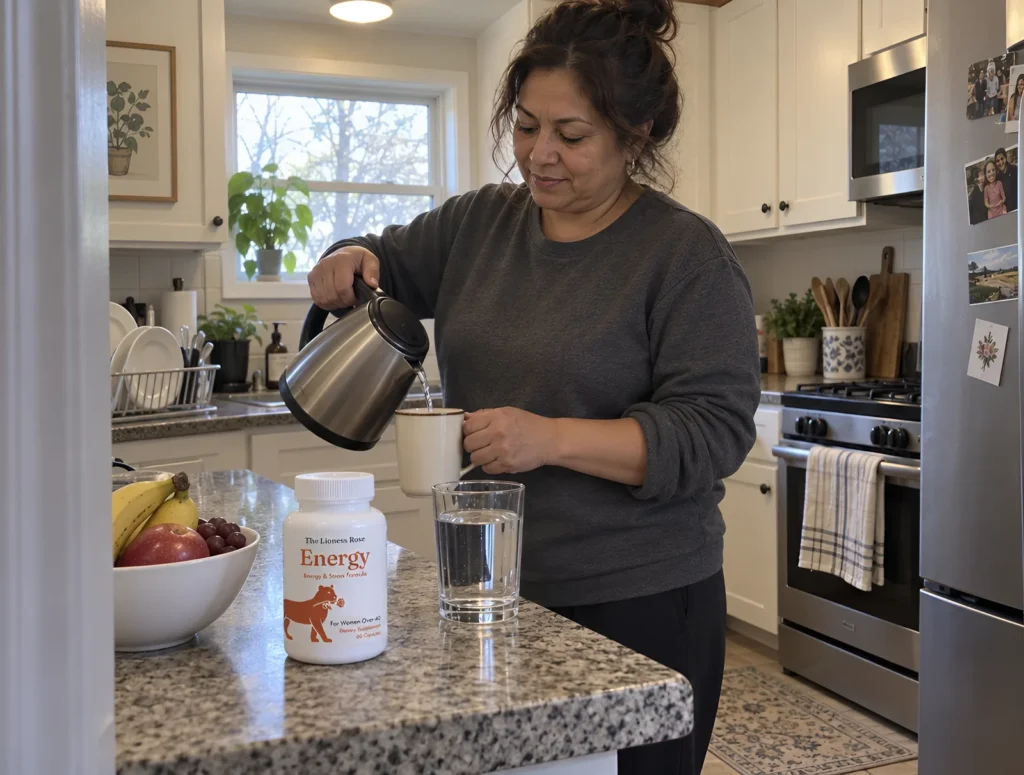
Not a tea person? You can skip the cup. Energy, our caffeine-free morning formula made for women over 40, gives you 600 mg of KSM-66 ashwagandha, which supports a healthy response to occasional stress, helping you stay calm and focused. Maca, Panax ginseng, shatavari and vitamins B6 and B12 come along for the ride. No caffeine. No crash. Just two capsules with breakfast, and 60 days to feel it, or it’s free.
Want to see how much energy you have left today? Take our free Energy Check. It takes about 2 minutes. Three quick steps check your hand speed, your legs and how awake you feel.
Common Questions
What tea is best for stress?
It depends on you. No single tea has been shown to be the best. In one trial, black tea helped men relax and lowered cortisol after stress. Lavender oil capsules and ashwagandha looked promising in a review, but the trials were small. For chamomile, the proof is unclear.
How to reduce stress and anxiety immediately?
Take a few deep breaths. Stretch. Try a short meditation, or step outside. A break from the news helps, and so does talking with someone you trust. Over time, good sleep, exercise and less alcohol keep stress lower. In a crisis, call or text 988.
Does stress relief tea actually work?
It may help a little. In one trial, black tea lowered cortisol after a hard task and helped men relax. A review of herbs found some promise, but called the results early. Most studies used capsules, not tea. And a dummy pill alone can make people feel better.
What drink relieves stress fast?
A warm cup of tea gives you a calm break. In one trial, black tea helped men come back down after stress. But no drink works like a switch. Go easy on alcohol, since the advice for women is 1 drink a day or less. Deep breaths help too.
Sources
- Chamomile, National Center for Complementary and Integrative Health
- Lavender, National Center for Complementary and Integrative Health
- Ashwagandha, National Center for Complementary and Integrative Health
- Medicinal herbs for the treatment of anxiety: A systematic review and network meta-analysis, Pharmacological Research, 2022
- The effects of tea on psychophysiological stress responsivity and post-stress recovery: a randomised double-blind trial, Psychopharmacology, 2007
- Managing Stress, Centers for Disease Control and Prevention