Why you may feel bloated around ovulation, when bloating peaks in your cycle, what helps, and when to see a doctor.
Ovulation bloating is that tight, puffy belly in the middle of your cycle. Your jeans feel snug. And your period is still a week away. It is one of the most common signs that your body is letting go of an egg. In one study, 62 women rated their bloating every day for a year. It rose slowly around the egg’s release. It kept rising, and it peaked on the first day of the period. Most bloating is harmless. But see a doctor if it lasts more than a week.
What Is Ovulation?
Ovulation is the moment an ovary lets go of an egg. The egg travels down a tube, where sperm can meet it.
When It Happens
Your cycle starts on the first day of your period. A normal cycle lasts 21 to 35 days. In a 28-day cycle, the egg comes out around day 14. Most women release an egg about 14 days before the next period. So if your cycle is long, it happens later. If your cycle is short, it happens sooner.
The release takes only a few seconds. The egg then lives about 12 to 24 hours. But you can spot signs for days before it. Stress, too much exercise and extra weight can change when, or if, it happens.
What Happens in Your Body
Each month, small sacs in your ovaries start to grow eggs. Between days 10 and 14, one of them makes a fully grown egg. Then a quick rise in a hormone called LH tells the ovary to let it go. Think of LH as the starting gun. After that, other hormones rise to get the womb ready for a baby.
Signs to Watch For
Not every woman notices signs. When they show up, the most common are:
- Tender breasts
- Bloating
- Pain in the pelvis or belly
- Light bleeding or spotting
- A higher sex drive
- A sharper sense of smell, taste or sight
- Mood changes
- Changes in appetite
Two more signs are easy to track. Just before the egg comes out, the mucus from your cervix gets thin and slippery. And your body heat at rest goes up by about 0.5 to 1 degree. It stays up until your next period.
Why You Feel Bloated Around Ovulation
Bloating is a feeling of tightness, pressure or fullness in your belly. Your belly may feel hard. It may even look bigger. So why would the middle of your cycle do that?
Your Hormones Shift
Two hormones lead the way. The first is estrogen. It climbs in the first half of your cycle and peaks just before the egg comes out. Then it has a second, lower peak after.
The second is progesterone. It stays low in the first half. It goes up after the egg comes out, and it stays high until your period.
Water and Gas
Estrogen makes your body hold on to water. When estrogen spikes and progesterone drops, fluid can build up. These two hormones also change how fast food moves through your gut. When food moves slower or faster than usual, you can get more gas.
So the puffy feeling can come from water, from gas, or from both. Some days you get both at once.
Other Changes at the Same Time
Some women notice other things mid-month. You may feel hungrier. Your breasts may feel tender. You may get a twinge of pain on one side. These can show up along with the bloating. Or you may notice none of them at all.
What We Do Not Know Yet
The link between hormones and bloating is not clear. In the year-long study below, the hormone levels in the blood did not match how bloated the women felt. Bloating also peaked when both hormones were low, on the first day of the period. The researchers think your body may react to hormone changes with a delay. But no one has shown that yet.
What a Year of Symptom Diaries Showed
A study from 2011 tracked bloating day by day, through the whole cycle. Here is what it found.
How the Study Worked
Researchers followed 62 healthy women for a year. The women were 20 to 42 years old. Each day, they wrote down how puffy or bloated they felt. They used a scale from 0, for none, to 4, for very strong. In all, the study covered 765 cycles. The women also took their temperature every morning. That showed when each one released an egg.
When Bloating Rose and When It Peaked
- Bloating was lowest in the days after the period ended.
- It rose slowly around the egg’s release. The score went from 0.22 five days before to 0.50 five days after.
- It kept rising in the second half of the cycle.
- It peaked on the first day of the period, at about 1 on the scale.
- Then it dropped fast once the period started.
What This Means for You
Bloating in the middle of your cycle is real. You are not imagining it. For most of these women it was mild, and their scores stayed low all year. The feeling builds slowly. It is strongest when your period starts. Then it eases in the first days of bleeding.
The Limits of This Study
The women were healthy and at a normal weight, and none of them smoked. Bloating was what they felt and wrote down. No one measured their waist. None of them had used hormone birth control in the six months before. So the results may not match women on birth control, or women with other health problems. Your own pattern may look different too.
Ovulation Bloating or Something Else?
Bloating mid-cycle is often normal. But other things cause the same feeling, so it helps to know them.
Pain on One Side
Some women feel a sharp, crampy pain low on one side when the egg comes out. Doctors call it mittelschmerz, or midcycle pain. About 1 in 5 women get it. It lasts minutes to a few hours. But it can last 24 to 48 hours. It is not harmful. Call your doctor if the pain changes, lasts longer than usual, or comes with bleeding. For other reasons you may cramp with no period, read cramps but no period.
PMS
PMS starts in the second half of your cycle, after the egg comes out. Bloating and feeling gassy are two of its most common signs. PMS can also bring sore breasts, food cravings and headaches. They most often go away 1 to 2 days after your period starts.
Gas From Food and Drinks
Extra gas is the most common cause of bloating. You swallow air when you eat too fast. Fizzy drinks add more. Eating too much at once can leave you bloated too. Many people have trouble with some carbs as well. Think of milk sugar, fruit sugar, and the carbs in wheat and beans.
Other Causes
Being backed up can make you feel bloated. So can IBS, a gut problem. Some medicines list bloating as a side effect. Bloating is common in pregnancy too. And it is common in the years before menopause, when hormones swing up and down.
Is There a Pattern?
Does your bloating come at random times, with no link to your cycle? Then it may not be about hormones at all. A simple diary can show you the difference.
How to Ease Ovulation Bloating
Most bloating gets better with a few simple changes at home. You don’t need to try them all at once.
Move Your Body
Walking helps move gas through your gut. Even a short walk after a meal helps. Try not to sit for long stretches. Moving also helps your body let go of extra water, and it keeps your bowels moving. Regular exercise all month can make PMS milder too.
Go Easy on Salt
Salt makes your body hold on to water. Packaged foods are often high in salt and low in fiber. So eat more fresh food and fewer boxes. Cutting back on sugar may help too.
Choose Your Drinks
Fizzy drinks add gas to your belly. For PMS bloating, skip soft drinks, alcohol and drinks with caffeine. Drink plenty of water instead, or juice. Water keeps food moving through your gut. Like a warm cup better? Read about herbal tea for bloating.
Eat Slowly
Chew your food well. Stop eating before you feel full, since that full feeling comes a little late. Eating too much, too fast is one of the simplest causes of bloating.
Add Fiber
Fiber helps your gut work well. But foods like beans and broccoli can cause more gas at first.
Find Your Triggers
Some foods may bloat you more than others. A food journal can help you spot them. Write down what you ate and how you felt. Do it for a few weeks and read it back.
When Home Care Is Not Enough
If a food problem or a health problem is behind your bloating, your doctor can help. They may send you to a dietitian to try cutting out some foods for a while. They may also suggest a simple breath test that checks for some gut problems.
Track Your Cycle and Your Bloating
Tracking helps you learn your own pattern. It also shows whether your bloating really follows your cycle.
Four Ways to Know When the Egg Comes Out
- Calendar or app: write down the first day of each period for a few months.
- Mucus: it turns clear, thin and slippery just before the egg comes out.
- Test kits: these check your pee for the hormone LH. A plus sign means the egg is due within 36 hours. Start on day 10 of your cycle, in the morning.
- Body heat: check it each morning before you get out of bed, and before you eat or drink. It goes up a little once the egg has come out. So it tells you after the fact, not before.
Add Bloating to Your Log
Each day, rate your bloating from 0 to 4, the way the women in the study did. Also write down:
- What you ate
- Your period days
- Any pain, and on which side
- How stressed you felt. Stress can change your cycle
Keep your diary for at least 3 months. After a few cycles, you will see if your bloating builds mid-cycle and peaks with your period.
Add your energy to the log too. Our free Energy Check takes about 2 minutes. Three quick steps check your hand speed, your legs and how awake you feel. Take it on different days of your cycle and compare.
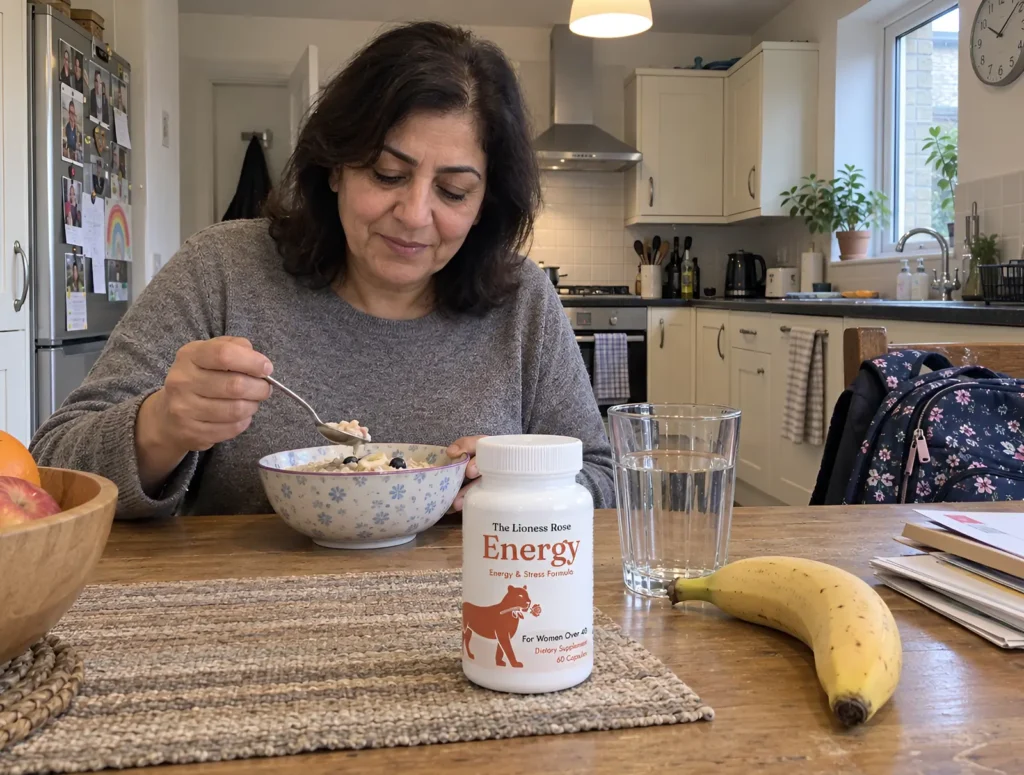
If your cycle leaves you drained as well as bloated, meet Energy, our caffeine-free morning formula made for women over 40. Vitamins B6 and B12 help reduce tiredness and fatigue. KSM-66 ashwagandha supports a healthy response to occasional stress. No caffeine. No crash. Just two capsules with breakfast, and 60 days to feel it, or it’s free.
If You Want to Get Pregnant, or Not
The days around the egg’s release are your most fertile. An egg lives about a day once it is out. But you can get pregnant from about 5 days before it until 1 day after. So knowing your pattern helps you plan either way. It also gives your doctor real facts if you ever need help.
When to See a Doctor
Bloating is usually harmless, and cycle bloating tends to fade once your period starts. Still, some signs mean you should get checked. See your doctor if:
- Your bloating lasts more than a week.
- It is very painful.
- It comes with fever, vomiting, bleeding or weakness.
- You lose weight and don’t know why.
- It does not go away, or it keeps getting worse.
- Pain in the middle of your cycle changes, lasts longer than usual, or comes with bleeding.
- You go months without a period.
Bloating that does not go away can have more serious causes, including some cancers. So let a doctor take a look.
Common Questions
What are the 7 signs of ovulation?
There is no official list of seven. Eight signs are common. Tender breasts, bloating, pain in the pelvis or belly, light spotting, a higher sex drive, sharper senses, mood changes and hunger changes. Thin, slippery mucus and a small rise in body heat are easy to track too.
Does your stomach look bigger during ovulation?
It can. Bloating can make your belly feel tight and look bigger. In a year-long study, women felt more bloated in the days around the egg’s release. For most, the feeling was mild. It peaked on the first day of the period. No one measured waist size.
How many days after ovulation do you get bloated?
Bloating often starts before the egg comes out. Then it keeps building. In one study, scores rose from 5 days before to 5 days after. They kept rising until the period. Bloating peaked on day one of the period, then dropped fast.
When do you bloat the most in your cycle?
In a study of 62 women, followed for a year, bloating peaked on day one of the period. It was lowest in the days after the period ended. Then it rose slowly in the middle of the cycle and through the second half.
Sources
- Ovulation, Cleveland Clinic
- Fluid Retention over the Menstrual Cycle: 1-Year Data from the Prospective Ovulation Cohort, Obstetrics and Gynecology International, 2011
- Bloated Stomach, Cleveland Clinic
- Mittelschmerz, MedlinePlus, National Library of Medicine
- Premenstrual Syndrome, MedlinePlus, National Library of Medicine
- Fertility Awareness-Based Methods of Family Planning, American College of Obstetricians and Gynecologists