Which vitamins and minerals affect your energy, why they help mainly when you are low, who is most at risk, and what to check if you are always tired.
Vitamins for energy work best when you are low in them. B vitamins help turn your food into fuel. Iron helps your blood carry oxygen. So when you lack iron, B12 or folate, you feel tired and weak. But if your levels are fine, more will not lift you. Low iron hits women who have periods hardest. They lose iron every month. Are you tired all the time? Ask your doctor for blood tests before you buy a single pill.
Can Vitamins Give You Energy?
Your energy comes from food. Carbs, fats and proteins are the fuel. That is the whole base of it. Vitamins and minerals help your body use that fuel. They are needed for life, and your body does not make them. You get them from food, or from pills.
How B Vitamins Help
There are eight B vitamins. Most of them help turn the carbs, fats and proteins you eat into fuel. They work as helpers called coenzymes. Think of a coenzyme as a switch. It turns on an enzyme, a protein that speeds up work inside you.
Are you low in any B vitamin? Then your body gets much less out of your food.
Most B vitamins are not stored, so you need them from food each day. B12 is the exception. Your liver keeps a store of it.
Where Iron Fits In
Iron is a mineral, not a vitamin. But it plays a big part. Your body needs it to make hemoglobin. That is the part of red blood cells that carries oxygen. Your cells need that oxygen to make energy. So without enough iron, your tissues get less, and you feel tired. Picture a delivery van with half a tank.
Why Your Levels Matter
These nutrients help most when your own levels run low. And you can run low without knowing it. B12 is not part of routine blood work. And women lose iron with every period.
What Low Levels Can Cause
Low iron, B12 or folate can each cause anemia. That means you do not have enough healthy red blood cells. Signs can include tiredness, weakness, dizziness, pale skin and shortness of breath.
Iron: A Common Cause of Tiredness in Women
Why Women Run Low
Low iron is the top cause of anemia. That means too few healthy red blood cells. And it is the one to check first. It hits women who have periods hardest. You lose blood, and iron, every month. Heavy or frequent periods raise the risk. Being pregnant or nursing raises your need too. Up to 20% of pregnant women get anemia.
You can also run low if you eat too little iron. A strict meat-free diet can do that. Some health problems block the iron you eat. Those are celiac disease, Crohn’s disease and gastric bypass. Long use of aspirin, ibuprofen or blood thinners can cause bleeding in the gut. That drains iron too.
Signs of Low Iron
A mild case may cause no signs at all. When signs come, they start slowly:
- Feeling weak or tired more than usual, or when you work out
- Headaches
- Feeling dizzy
- A racing or pounding heartbeat
- Trouble focusing
As it grows, you may notice brittle nails, pale skin or a sore tongue. You may get short of breath, or lose hair. Some women crave ice.
Test Before You Take Iron
Your doctor can check with blood tests. Those are a full blood count, serum iron and ferritin. Most doctors measure your iron before you start any pill.
Are you not low? Then iron pills will not give you energy. Iron is not a lift. It is a fix for a gap. Too much iron can harm your liver, your heart and more. It may even leave you tired.
Foods With Iron
Good sources are meat, fish, chicken, turkey, beans, lentils, peas and chickpeas. Whole-grain bread, oatmeal, raisins, apricots, spinach and kale carry iron too. Vitamin C helps you take iron in. So pair them with oranges, kiwi, berries, broccoli or tomatoes. Easy wins, all of them.
Vitamin B12
B12 helps your body make red blood cells and DNA. It also matters for your organs and your brain.

Signs of Low B12
Low B12 may cause no signs, or only mild ones. They can include:
- Tiredness, no energy, or a light head when you stand up
- Pale skin
- Shortness of breath, mostly when you move
- Loss of appetite, diarrhea or being backed up
- A swollen, red tongue, or bleeding gums
- A short fuse
Stay low for a long time, and it can harm your nerves. That can bring numbness and tingling in your hands and feet, a loss of balance, and trouble focusing.
Who Is Most at Risk
Low B12 is more common in people who:
- Are over 65
- Eat a strict vegan or vegetarian diet, since B12 comes from animal foods
- Have had weight loss surgery
- Have a gut problem like gastritis, celiac disease or Crohn’s disease
- Take heartburn pills for a long time, or the diabetes drug metformin
About 6% of people 60 and older are low in B12. Part of the reason is simple. It gets harder to take B12 in from food as you age.
Why It Can Go Unnoticed
B12 is not checked in routine blood work. So a shortage can hide for years. Its signs can be quiet, or they can look like other problems. Do you have the signs, or the risks? Then ask your doctor to test you.
Will Extra B12 Give You Energy?
If your B12 is low, raising it can ease your tiredness and leave you feeling more alive. That is one more reason to ask for the test, since routine blood work skips it.
Folate and Vitamin B6
Folate
Folate is the food form of this B vitamin. Folic acid is the form in pills. Your body uses it to make DNA. It also keeps your red blood cells healthy. Too little can cause anemia. And you need some each day, since your body does not store it.
Most people get plenty. Many packaged foods have folic acid added, like bread and flour. Spinach, black-eyed peas, asparagus, sprouts, lettuce and avocado all carry folate.
Folate matters most early in pregnancy. It helps form the neural tube. That tube becomes the baby’s brain and spine. That tube often forms before you even know you are pregnant.
There is one catch. Folate pills, taken for a long time, can hide low B12. And that can be risky. So most people should skip them. Not you, though, if you are pregnant, or may be soon, or if your doctor says to take them.
Vitamin B6
B6 takes part in more than 100 enzyme reactions. It helps how you burn food. It helps your immune system and your brain. It also breaks down homocysteine, an amino acid. Too much of that can bring blood clots, hard arteries and a heart attack. Chickpeas, tuna, salmon, chicken, potatoes, turkey and bananas all carry B6.
B6 or B12?
They do different jobs, and your body needs both. B6 takes part in more than 100 enzyme reactions. B12 helps make red blood cells and DNA. And low B12 is a known cause of anemia and tiredness. So there is no need to pick. You can have both.
Vitamin D and Magnesium
Vitamin D
Low vitamin D can leave your bones and muscles weak. That makes plain daily tasks harder. It can pull your mood down too. And a low mood drains you. Studies that watch people link low levels with other risks too. Cancer, heart disease and diabetes.
Your skin makes it from sunlight. You also get it from fish. Tuna, salmon, mackerel and herring. Some milk, soy drinks, orange juice and cereals have it added. For older adults who are low, D3 is the form to take. Your body takes it in more easily.
Magnesium
Magnesium helps break glucose, a sugar, down into energy. About 48% of people in the U.S. get less of it than they need. Low intake is linked with type 2 diabetes and high blood pressure. Also with weak bones, migraines, asthma and colon cancer. Worried you are low? Ask your doctor for a blood test.
High-fiber foods are the best sources. Think dark green leafy vegetables, whole grains and beans. Nuts, seeds, milk and yogurt carry it too.
The Other B Vitamins
Thiamin, or B1, helps turn food into ATP. That is the energy your cells run on. It also keeps your nerve cells working. Niacin, or B3, helps move the energy in food into ATP. Riboflavin, or B2, is part of two coenzymes you need to make energy. Low B2 is rare in the U.S. Pantothenic acid, or B5, helps make coenzyme A. That helps build and break down fats. Biotin, or B7, helps the enzymes that break down what you eat.
What to Check If You Are Always Tired
Tiredness is common. Most often it is not a sign of serious illness. Low vitamins or low iron are only some causes. Blood tests can show if a shortage is part of your picture.
Tests to Ask About
- A full blood count, or CBC, which checks for anemia
- Iron tests, such as serum iron and ferritin
- A B12 level, since B12 is not part of routine blood work
- Magnesium, if you think you may be low
Ask for them by name. Then bring the list home.
For B12, your doctor may also test homocysteine.
Want a quick read on your energy right now? Take our free Energy Check. It takes about 2 minutes. Three quick steps check your hand speed, your legs and how awake you feel.
Is your iron low? Then your doctor may hunt for the source of the blood loss. That can mean a stool test, or a look inside your gut. It can also mean tests of your womb or urinary tract.
Clues to Mention
Does your tiredness come with pale skin, shortness of breath, dizziness or a racing heart? Tell your doctor. Mention heavy periods, a vegan diet or weight loss surgery too. The same goes for pills like metformin or heartburn drugs. And numbness or tingling in your hands and feet can point to low B12.
When It Is Something Else
Do your tests come back normal? Then the cause lies somewhere else. Sleep problems, stress, thyroid trouble, a low mood and some pills can all leave you feeling tired all the time. Does the tiredness stay even with enough sleep, good food and less stress? Then have your doctor look into it.
Call Your Doctor
Call if you have signs of low iron. Call too if you see blood in your stool, or stool that looks black and tarry.
Pills, Energy Drinks and What to Choose
Food First
Food first. Pills second. Most people should get their B vitamins from food, not from pills. Whole foods bring other things with them, like fiber. A pill does not. There are two exceptions. Are you pregnant, or may you be soon? Then take a prenatal vitamin with folate. Do you eat no animal foods, and none with B12 added? Then take B12. Want one pill with a bit of it all? Read about a multi for women.
What About Energy Drinks?
Energy drinks are sold to make you feel awake and sharp. Read the can, then think twice. Caffeine is the main part. A 16-ounce can may hold 70 to 240 mg. An 8-ounce cup of coffee holds about 100 mg. Many cans add sugar, taurine, ginseng, B vitamins or guarana. And guarana holds caffeine too.
A lot of caffeine may upset your heart rhythm. It can raise your heart rate and your blood pressure. Caffeine is linked with worry, poor sleep and stomach trouble too. A 16-ounce energy drink may hold 54 to 62 grams of added sugar. That is more than a whole day should bring. And the label does not have to tell you how much caffeine is inside.
A Morning Formula Made for Women Over 40
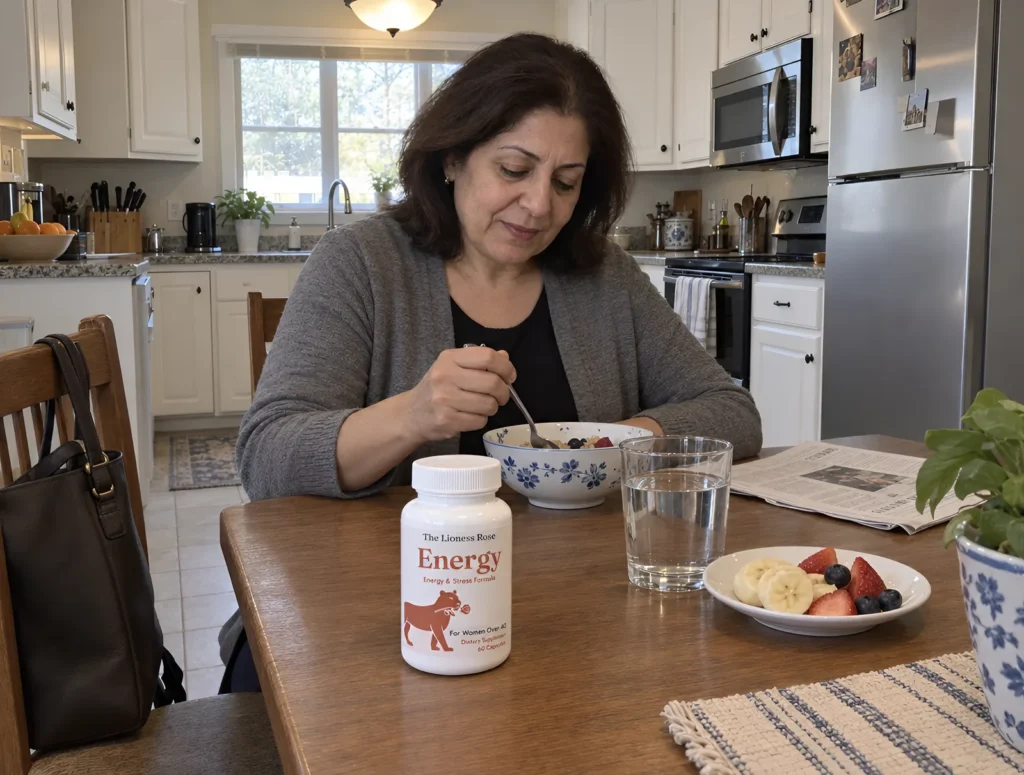
Tired of energy that comes in a can and leaves by 3 PM? Energy is our caffeine-free morning formula made for women over 40. Two capsules give you vitamin B12 at 1042% DV and vitamin B6 at 147% DV, which help reduce tiredness and fatigue, plus vitamin D3 at 100% DV.
Then come four roots women have trusted for generations: 600 mg of KSM-66 ashwagandha, which supports a healthy response to occasional stress, plus maca, Panax ginseng and shatavari. No caffeine. No crash. Just two capsules with breakfast, and 60 days to feel it, or it’s free.
Before You Start
Tell your doctor what you plan to take. That matters most if you take other pills. Same if you live with a health problem. And if a test shows you are low, your doctor picks what comes next. It depends on the cause.
Common Questions
What vitamin gives the most energy?
Your energy comes from food. B vitamins help turn that food into fuel. The one that helps you is the one you are low in. Low iron, B12 or folate can cause anemia and leave you worn out. Most B vitamins are not stored, so you need them daily.
What vitamins help with tiredness and fatigue?
When you are low, these can help. Iron, B12, folate, vitamin D and magnesium. Low iron, B12 or folate can cause anemia. Low vitamin D leaves your muscles weak and your mood flat. Fixing a shortage can ease the tiredness. Blood tests show what you need.
What vitamins am I lacking if I’m constantly tired?
Iron is a common one for women. Periods drain it each month. B12 is another, mostly if you are over 65, vegan, or take metformin or heartburn pills. Low folate, vitamin D or magnesium can play a part too. Ask for blood tests, and include a B12 level.
Is B6 or B12 better for energy?
They do different jobs, and your body needs both. B6 takes part in more than 100 enzyme reactions. B12 helps make red blood cells and DNA. And low B12 can cause anemia and tiredness. So you do not have to choose between them.
Sources
- Best Vitamins and Minerals for Energy, Harvard Health Publishing
- A Close Look at Each of the B Vitamins, Cleveland Clinic
- Vitamin B12 Injections: What They Can and Can’t Do, Cleveland Clinic
- Iron Deficiency Anemia, MedlinePlus, National Library of Medicine
- Vitamin B12 Deficiency Anemia, MedlinePlus, National Library of Medicine
- Energy Drinks, National Center for Complementary and Integrative Health