Why you can have cramps without a period, from ovulation and early pregnancy to perimenopause and your gut, and the signs that need a doctor.
Cramps but no period can leave you staring at the calendar, doing the math. Take a breath. There is often a simple reason. Your period may be a day or two away. You may be about to release an egg. You may be pregnant. Or you may be nearing menopause. Gas can do it too, and so can problems like endometriosis. Most belly pain is not a big deal. But could you be pregnant? Then sudden, severe pain, shoulder pain or feeling weak means go to the ER.
Your Period May Be About to Start
Often, the cramps show up first and the bleeding follows. So if your period is due soon, the cramps may just be early.
When Period Cramps Usually Start
Cleveland Clinic says period pain most often begins 24 to 48 hours before your period. It tends to ease within 48 hours after the bleeding starts. Cramps are most common the day before your period, or the day it starts.
You may feel the pain in your lower belly, your back or your thighs. It can be mild or severe. About 60% of women have mild cramps with their period, and mild to moderate cramps are normal. For many women, periods hurt less with age.
Why You Feel Cramps Before You Bleed
The cramps come from chemicals called prostaglandins. They make your womb tighten so it can shed its lining. Think of a fist that squeezes, then lets go. Their levels rise right before your period. That is why you can cramp before you see any blood. Do you feel sick and achy in those days too? Read about period flu.
Cramps That Start Days Earlier
Some cramps start several days before a period and last until the bleeding stops. This can mean a health problem in your womb, ovaries or tubes. Fibroids are one example. You will read more about these below.
If your cramps are severe or unusual, or last more than three days, call your doctor.
Keep a Simple Record
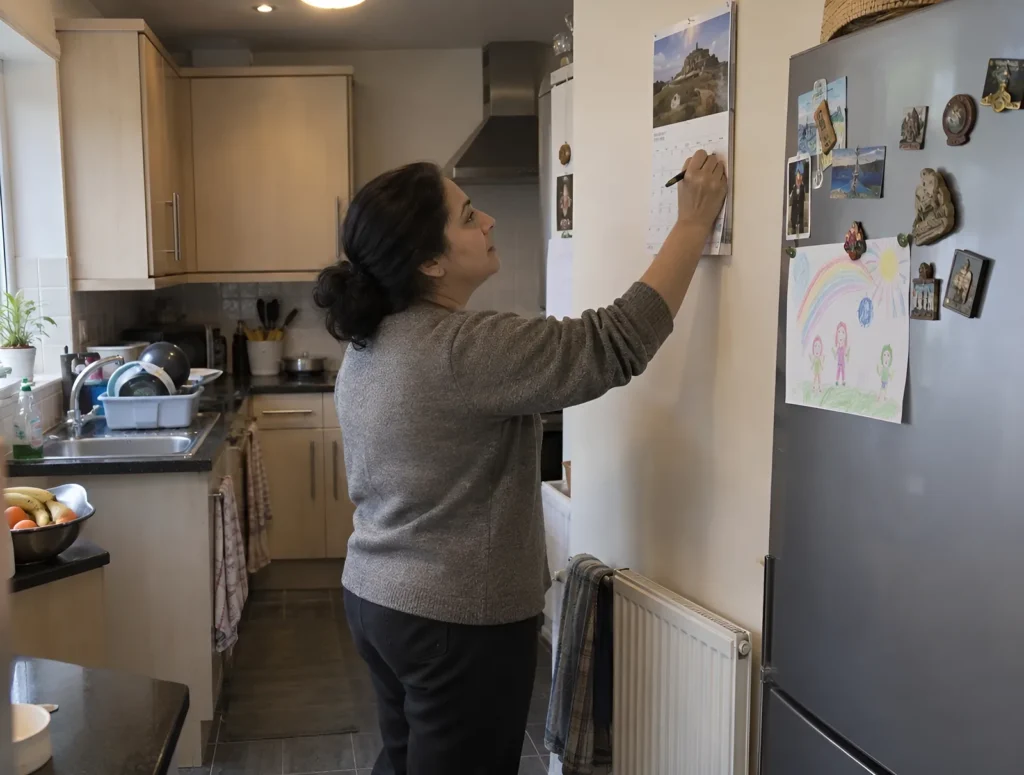
Jot down your periods and the days the pain is worst. Add other symptoms too, like headaches or heavy bleeding. A notes app on your phone works fine. This helps your doctor see a pattern. And if your period does not come, it shows how late it is.
Ovulation Pain in the Middle of Your Cycle
About halfway through your cycle, one of your ovaries lets go of an egg. This is ovulation. For some women, it hurts.
What Ovulation Pain Feels Like
About 1 in 5 women have pain when they ovulate. Doctors call it mittelschmerz, or midcycle pain. It may come just before, during or after the egg is released. The pain:
- Is on one side of your lower belly
- Starts midway through your cycle
- Feels sharp and crampy
- Lasts minutes to a few hours, but can last up to 24 to 48 hours
- May switch sides from month to month
It can also stay on the same side for months in a row. It is rarely severe.
Why It Happens
Before the egg comes out, the sac it grows in can stretch the ovary. Think of air stretching a balloon. That can hurt. When the egg comes out, some fluid or blood comes out too. This can bother the lining of your belly. Does your belly feel puffy then too? Read about ovulation bloating.
Is It Harmful?
This pain can hurt, but it is not harmful. It is not a sign of disease, and most of the time it needs no treatment. Pain relievers may help if the pain is strong or lasts long. And here is a bonus: this pain can even help you tell when your body releases an egg.
Still, other problems can feel like this, and some are much more serious. So tell your doctor about any pain you have. With this pain, a pelvic exam shows nothing wrong. If the pain keeps coming back, your doctor may use an ultrasound to look for other causes. Call your doctor if the pain changes, lasts longer than usual, or comes with bleeding.
Could It Be Early Pregnancy?
Late period, a few cramps, and a thought pops into your head: could I be pregnant? It is possible. Cramps can be one of the first signs that you are.
Implantation Cramps
About 10 to 14 days after you ovulate, a fertilized egg attaches to the lining of the womb. This can make tiny blood vessels in the lining bleed. The result is very light bleeding, called spotting. When it happens, most women have not missed a period yet. About 1 in 4 pregnant women have it, but not everyone does.
Any cramping should be very light or mild. It should feel softer than period cramps. It can also come close to the day your period is due. So it is easy to mistake for your period.
How the Spotting Looks
The spotting is pink or brown. It looks more like normal discharge than a period. A panty liner is often all you need. It should stop on its own after about two days. It does not look the same for all women. This spotting does not harm you or the baby. Bright or dark red blood, a heavy flow or clots are usually not this kind of spotting.
Other Early Signs
Being newly pregnant can also bring:
- Sore breasts
- Bloating
- Nausea
- A headache
- Feeling tired
When to Take a Test
Home pregnancy tests look for a hormone called HCG. Your body starts to make it after the egg attaches. Test too soon, and the result may say no even if you are pregnant. For the best answer, wait until you are sure you missed a period. A blood test from your doctor can tell you sooner.
Call your doctor if you bleed heavily, pass clots, or have cramps and pain.
Ectopic Pregnancy: Cramps That Need Care Now
This one can be an emergency, so it is worth knowing the signs.
What It Is
In an ectopic pregnancy, the egg grows outside the womb. More than 90% of the time, it grows in one of the tubes an egg travels through to reach the womb. As it grows, the tube can burst, like a pipe that gets too full. That can cause bad bleeding inside your body. It can put your life at risk.
The Early Signs
At first, it can feel like a normal pregnancy. You may have a missed period, sore breasts or an upset stomach. Other signs can include:
- Bleeding that is not normal for you
- Low back pain
- Mild pain in the belly or pelvis
- Mild cramping on one side of the pelvis
At this stage, it can be hard to tell a normal one from an ectopic one. So tell your doctor about any odd bleeding and pelvic pain. To check, your doctor may do a pelvic exam, an ultrasound and a blood test for HCG.
Go to the Emergency Room If You Have
- Sudden, severe pain in your belly or pelvis
- Shoulder pain
- Weakness, dizziness or fainting
Who Is at Risk
The risk is higher if you had one before, or surgery on your tubes. Some infections passed during sex raise the risk too. So do PID, an infection of the womb and tubes, and endometriosis. Smoking, being older than 35 and IVF add to it too. But about half of women who get one have no known risk.
It cannot move into the womb, so it always needs treatment. Doctors treat it with medicine or surgery.
Perimenopause: Cramps Without Bleeding
As you get closer to menopause, your cycle can start to act strange. Your hormones may be the reason for cramps with no period. Your body is not broken. It is changing.
What Perimenopause Is
It is the time leading up to menopause. You reach menopause once you go 12 months in a row without a period. Before that, your cycles may get shorter or longer by a week or more. You may skip a cycle. Your periods may come more often, or less. This stage can last a few years.
Why It Can Cause Cramps
Normally, estrogen drops after you ovulate. At this time, it may stay high. High estrogen can make your body release more of the chemicals that make the womb tighten.
These hormone swings can make your usual period symptoms worse, or bring new ones. So you may get cramps even if you never had them before. They may come without a period. Some women call it ovary pain. And if you always had cramps, they may get worse.
Your hormones can also make you ovulate at odd times, and that can bring cramps with no bleeding.
Other Things That Can Play a Part
Fibroids, cysts and other womb problems can cause pain that gets worse at this time. Cramps without bleeding are also more likely if you:
- Have an IUD that contains progestin
- Have had an ablation, a treatment that removes the lining of your womb
- Have had surgery to remove your womb
These often stop your periods. So see your doctor about cramps that change or get worse, even if your bleeding has not changed. Birth control with hormones can also help, with cramps too. Ask your doctor if it fits you.
Other Causes: Your Pelvis, Gut or Bladder
Not every cramp is about your cycle. So let’s look past it. The cause can sit in your pelvis, your gut or your bladder.
Problems of the Womb and Ovaries
Some health problems can cause cramps. Here they are in plain words:
- Endometriosis: tissue like the lining of the womb grows outside it. It can cause swelling, scarring and pain, and make it harder to get pregnant.
- Adenomyosis: the lining grows into the muscle of the womb. The womb can get bigger than it should, with pain and odd bleeding.
- Fibroids: growths in or on the womb that are not cancer.
- PID: an infection that starts in the womb and can spread. It can cause belly pain or pain during sex. It can also lead to trouble getting pregnant, or to an ectopic pregnancy.
That is one more reason to get checked. To find the cause, your doctor will ask about your periods and do a pelvic exam. An ultrasound can show your womb and ovaries. A cyst that bursts on an ovary can also cause belly pain.
Your Gut
Sometimes the cause is in your gut, not your womb. Most of the time, cramp-like belly pain is not a big deal. It is often due to gas and bloating, and diarrhea may follow. Other less serious causes include:
- Constipation
- IBS, a gut problem
- A food allergy, or trouble digesting a food like milk
- Food poisoning or a stomach bug
Some signs are more worrying. Watch for pain that comes more often, or lasts more than 24 hours. Watch for a fever or bleeding from your bottom too.
Your Bladder
A UTI, a bladder infection, can also cause belly pain. See your doctor if it burns when you pee or you need to go often.
When to See a Doctor and What Helps
Most of the time, cramp-like pain is not a big deal. But some signs mean you should not wait.
Get Help Right Away If You
- Have sudden, sharp belly pain
- Are pregnant, or could be, and have belly pain
- Have shoulder pain, or feel weak or faint
- Have a belly that is tender or hard to the touch
- Have trouble breathing
Call Your Doctor If You Have
- Belly pain that does not get better in 24 to 48 hours
- Belly pain that lasts a week or longer
- Bloating that lasts more than 2 days
- A fever with the pain
- Bleeding from the vagina that goes on and on
- Cramps that are severe, new or getting worse
What Can Help at Home
For cramps linked to your cycle, try these.
- A heating pad or hot water bottle on your lower belly or back
- Extra rest
- Light exercise, like walking or swimming
- Rubbing your lower back and belly
For period cramps, the first thing to try is often a pain pill called an NSAID, like ibuprofen or naproxen. Could you be pregnant? Not sure what is causing the pain? Then talk to your doctor before you take any medicine.

Cramps have a way of showing up on the nights you need sleep most. If your mind starts racing the moment you lie down, meet Sleep, our night formula made for women over 40. It has calming plants like chamomile, passion flower and lemon balm to help you unwind. It also has ashwagandha and GABA to help foster a sense of relaxation before bed. No knock-out pills. Just two capsules before bed, and 60 days to feel it, or it’s free.
Want to know how you really slept? Take our free Sleep Check. You answer 6 quick questions and see your sleep efficiency in about 30 seconds. No sign-up.
Common Questions
Which type of cramps indicate pregnancy?
Cramps alone can’t tell you. If the egg attaching causes cramps, they should be very light or mild. They feel softer than period cramps. They may come with pink or brown spotting, about 10 to 14 days after you ovulate. A test after a missed period gives you a clear answer.
Why do I feel like my period is coming but it doesn’t?
Period cramps often start a day or two before the bleeding. So your period may just be close. Cramps with a late period can also be an early sign that you are pregnant. And as you near menopause, cycles can get longer or skip. So cramps can come with no bleeding. If your period is late, take a pregnancy test.
Why do I have period cramps but no flow?
The cramps may come from releasing an egg, being pregnant or the years before menopause. Your period may be about to start. Fibroids can cause cramps days before a period. An IUD with progestin, or past surgery to remove the womb, can also mean cramps with no bleeding. See your doctor if cramps are new or get worse.
Can early pregnancy cramps feel like period cramps?
They can start around the time your period is due. So the two are easy to mix up. But cramps from the egg attaching should be very light or mild. If you could be pregnant and have sudden, severe pain or shoulder pain, go to the ER.
How long do ovulation cramps last?
This pain lasts minutes to a few hours. But it can last up to 24 to 48 hours. You feel it on one side of your lower belly, midway through your cycle. Call your doctor if the pain changes, lasts longer than usual, or comes with bleeding.
Sources
- Dysmenorrhea (Menstrual Cramps), Cleveland Clinic
- Mittelschmerz, MedlinePlus, National Library of Medicine
- Implantation Bleeding, Cleveland Clinic
- Ectopic Pregnancy, American College of Obstetricians and Gynecologists
- How To Deal With Perimenopause Cramps, Cleveland Clinic
- Abdominal Pain, MedlinePlus, National Library of Medicine