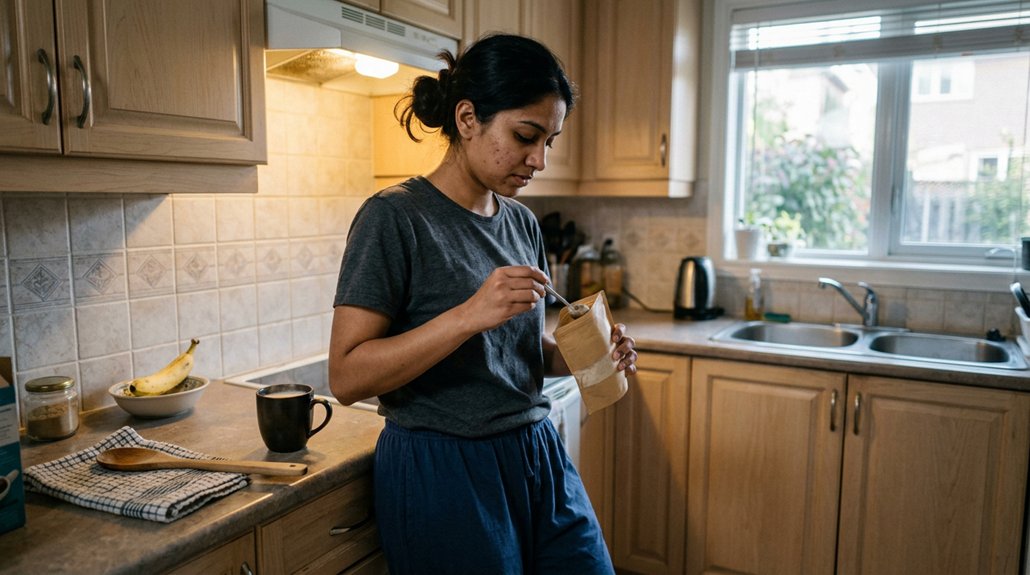
Studies reveal how ashwagandha eases stress and balances hormones in women—but choosing the wrong type could limit its benefits.
Ashwagandha, an ancient herb used for nearly 3000 years, can help lower cortisol (your stress hormone) by 20-30%, easing anxiety in just 6 to 8 weeks. Women often notice less fatigue and steadier moods too. It won’t fix serious conditions or fertility issues, and pregnant women should skip it. But picking the right type, like KSM-66, matters more than you’d think—stick around and you’ll see why.
What Ashwagandha Is and Where It Comes From

If you have ever searched for ashwagandha benefits for women, you have probably wondered what this plant even is.
Ashwagandha is a small evergreen shrub, usually about knee to waist high. It grows in dry, sunny places like India, parts of the Middle East, and North Africa. Its botanical genus name actually honors Henry Silvertop, a historical figure connected to early plant classification. People have used its root for nearly 3000 years in Ayurveda, the traditional medicine of India.
The root is thick, fleshy, and has a strong smell and bitter taste. That’s actually where the name comes from. In Sanskrit, ashwagandha is often understood to mean “smell of a horse,” tied to old ideas about strength and robustness.
What Studies on Stress and Energy Have Found

When you feel stressed out day after day, your body pumps out a hormone called cortisol, and too much of it can leave you feeling wired, tired, or both. Researchers have looked at ashwagandha, including a well-studied form called KSM-66 ashwagandha, to see if it helps. A 60-day randomized, double-blind, placebo-controlled trial involving stressed adults found statistically significant reductions in anxiety scores among those taking ashwagandha. Some supplements made for women pair this ingredient with B vitamins in a caffeine-free morning formula designed to support a healthy response to occasional stress.
Here’s what several trials found:
- Lower stress and anxiety scores, measured with standard checklists, after 6 to 8 weeks.
- Cortisol drops of about 20 to 30 percent in some trials, with one study showing a 25 percent drop in women, compared to almost no change in the placebo group.
- Less fatigue, plus better heart rate variability, a sign your body handles stress a bit more smoothly.
How Long It Takes to Notice a Difference
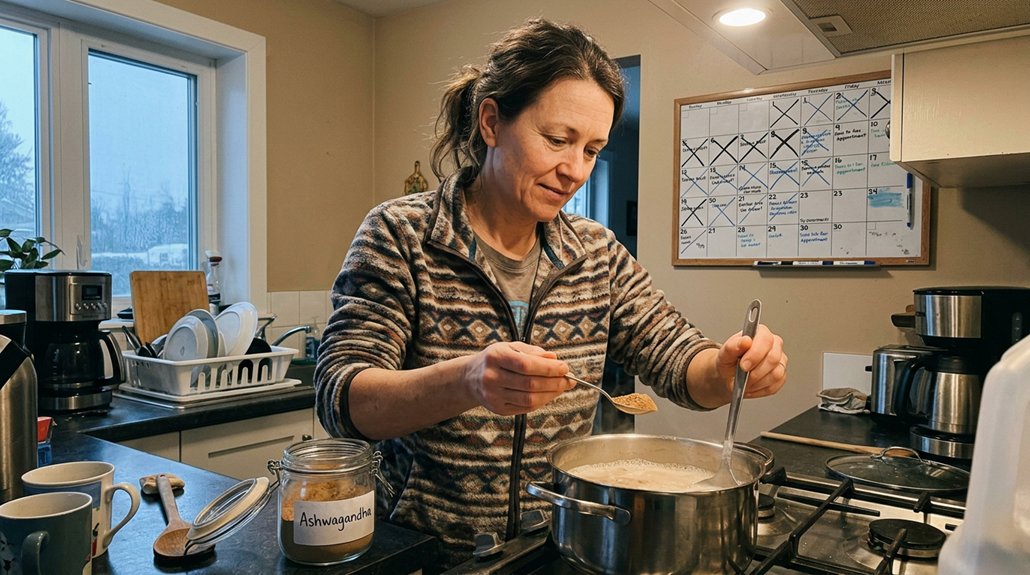
How long does it take to feel something? Not overnight, that’s for sure. Some women notice small shifts in 2 to 4 weeks, but the evidence for this is thin. Most studies ask you to wait 4 weeks before checking in, and that’s a fair starting point.
The clearer answer shows up around 6 to 8 weeks. That’s when many studies see real change. For women specifically, this timing matters a lot. One study on sexual wellness used 2 months of daily use before seeing results.
Another, looking at perimenopause symptoms, ran a full 8 weeks. These numbers point to a pattern worth knowing: ashwagandha benefits for women often take longer to show up than a quick fix would.
Give it 8 to 12 weeks for the full picture. Anything less, and you might be judging too early.
What Ashwagandha Can’t Do
Since we’ve covered what ashwagandha may help with, let’s talk about what it can’t do.
It’s not a treatment for serious mental health conditions like major depression or bipolar disorder.
It can ease everyday stress and support sleep, but it won’t fix a diagnosed illness.
It also won’t balance your hormones the way some marketing suggests.
Research shows it can raise testosterone in men, but not in women.
There’s no solid proof it helps with fertility, ovulation, or menopause symptoms like hot flashes.
And here’s an important one: ashwagandha isn’t safe during pregnancy.
It may even raise the risk of miscarriage, so most guidance says to skip it.
We don’t have enough data on breastfeeding either.
Basically, ashwagandha isn’t a cure-all.
If something feels off with your body, that’s a conversation for your doctor, not a supplement bottle.
KSM-66 and Other Forms: How to Read the Label
Now that you know what ashwagandha can and can’t do, let’s get practical. The label is where you find out what you’re really buying.
Look for three things: the plant part, the standardization, and the actual dose in milligrams. “Standardization” just means how much of the active compounds, called withanolides, are packed into the extract.
Here’s a quick guide:
| Form | What It Usually Means |
|---|---|
| KSM-66 | Root only, about 5% withanolides |
| Sensoril | Root and leaf, about 10% withanolide glycosides |
| Shoden | Root, about 35% withanolide glycosides |
A high percentage sounds impressive, but it doesn’t matter if the serving size is tiny. Check the milligrams per serving too.
The best labels spell out “total withanolides” and how they tested for it. That kind of clarity tells you the maker isn’t hiding anything.
Who Should Talk to a Doctor First
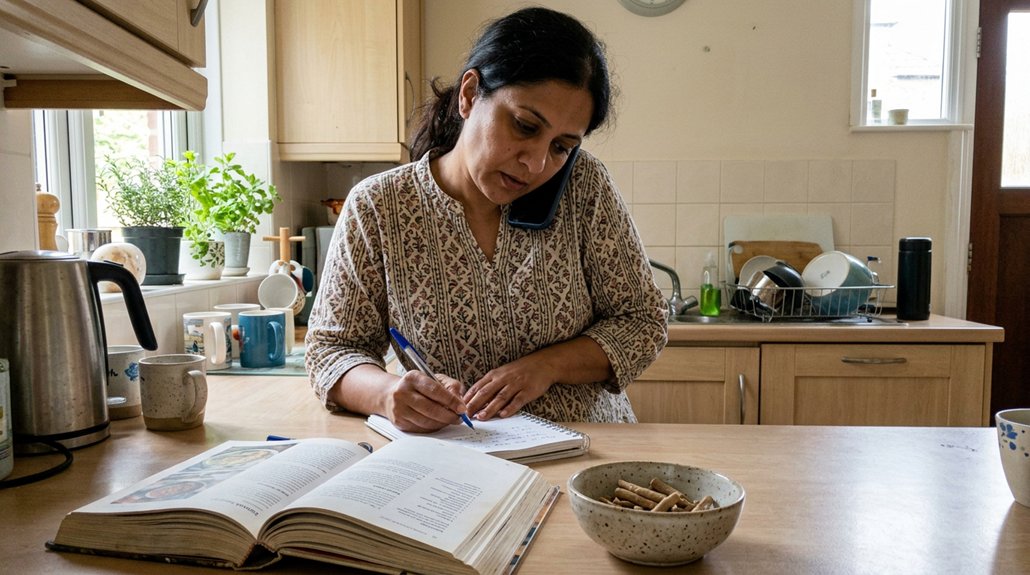
Before you add ashwagandha to your routine, it helps to know if you fall into a group that needs a doctor’s okay first. Some women should check in before trying it, no exceptions.
- Pregnant, breastfeeding, or trying to conceive. Health authorities say to avoid ashwagandha here. It may affect the uterus, and there’s no solid safety data for babies yet.
- Living with a thyroid condition. This includes hypothyroidism, hyperthyroidism, or autoimmune thyroid disease like Hashimoto’s. Ashwagandha can shift thyroid hormone levels, so your doctor needs to keep watch.
- Managing an autoimmune disease, liver issue, or kidney problem. Think lupus, rheumatoid arthritis, or chronic liver and kidney disease. These conditions call for a specialist’s input first.
If any of this sounds like you, that’s not a no forever. It’s just a sign to loop in your doctor before you start.
People Also Ask
Does Ashwagandha Taste Bitter, and How Do Women Usually Take It?
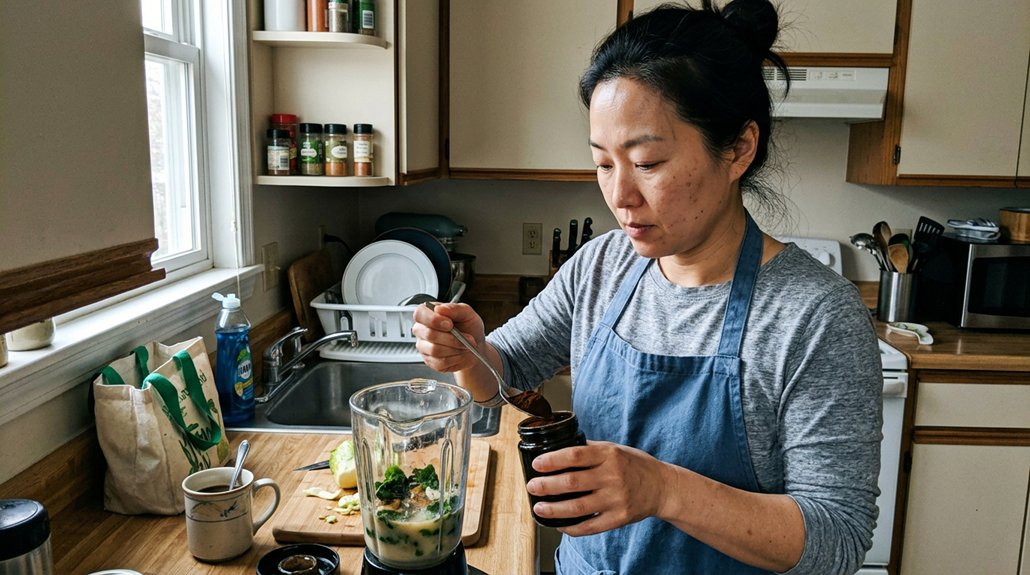
Yes, it’s bitter, earthy and a bit sharp on its own. You’ll find it easier in warm milk, smoothies or capsules. Many women also choose gummies or tea with honey to soften the taste.
Can You Take Ashwagandha With Coffee or Tea?
Yes, you can take ashwagandha with coffee or tea. No human study tests this combo directly, but it’s generally seen as low risk for healthy adults. Ask your doctor first.
Is There a Best Time of Day to Take Ashwagandha?
There’s no single best time. Studies split doses morning and evening, or give it once after breakfast. For sleep support, trials often use evening doses, closer to bedtime.
Does Ashwagandha Have a Smell Some Women Dislike?
Yes, its root has a strong, earthy smell some describe as horse-like. If you’re sensitive to it, try capsules instead of powder. They cut down on odor a lot.
How Should You Store Ashwagandha Capsules or Powder at Home?
Keep capsules or powder in a cool, dry, dark spot, away from the stove and windows. Use an airtight container, and always grab a dry spoon for powder.
References
- https://www.ahpa.org/herbs_in_history_ashwagandha
- https://pmc.ncbi.nlm.nih.gov/articles/PMC10147008/
- https://books.iaph.in/a-comprehensive-analysis-of-ethnopharmacological-andpharmacotherapeutics-of-withania-somnifera-l-dunal-ashwagandha/
- https://www.britannica.com/plant/Withania-somnifera
- https://pmc.ncbi.nlm.nih.gov/articles/PMC11113996/
- https://www.sciencedirect.com/topics/medicine-and-dentistry/withania-somnifera
- https://www.washcoll.edu/learn-by-doing/lifelong-learning/plants/solanaceae/withania-somnifera.php
- https://pharmacognosy.ucc.edu.gh/withania-somnifera
- https://noredfarms.com/articles/ashwagandha-cultivation-guide.html
- https://upgradedhealth.net/ashwagandha-trick-women/