
What a multivitamin is, what the research found, the nutrients that matter most for women, where it can go wrong, and how to read the label.
Multiple vitamins for women, packed in one daily pill, sound like a shortcut. About 31% of US adults take one. Here is the honest picture. A multi raises the nutrients you get each day. It can fill a gap when your food does not. It does not replace food. And the research does not show it keeping heart disease or cancer away. Two things really do matter for women: folic acid and iron. The label is the only way to judge a pill.
What a Multivitamin Actually Is
These pills hold a mix of vitamins and minerals. Sometimes other things ride along. People call them multis, multiples, or just vitamins.
There Is No Standard One
Here is the part that trips women up. There is no standard multi. No standard list of what goes in one, either. Two bottles on the same shelf can hold far more, or far less. And makers can change what is inside at will.
So “I take a multi” tells you almost nothing. The label tells you. So flip the bottle over, and read the back first.
The 13 Vitamins
Your body needs 13 vitamins to work right. They fall into two groups.
Four are fat-soluble: A, D, E and K. Your body stores them in your liver, your fat and your muscle. They go in better with some fat in the meal. So take them with lunch, not on an empty stomach.
Nine are water-soluble: vitamin C and all the B vitamins. Your body does not store those. What is left over leaves in your pee. So you need them often. B12 is the odd one out. Your liver can keep it for years.
And the Minerals
Minerals are the other half of the name. Iron, zinc, calcium and iodine are minerals, not vitamins. Your body needs them too. Most multis carry a set of them.
Why Women Buy Them
The reason people give is simple. Health in general, and filling the gaps in what they eat. That is fair enough. But it is also why the small print beats the front of the box. So start at the back of the bottle. That is where the truth sits. A pretty label tells you nothing about the amounts inside.
What the Research Says
Here the story goes quiet. Much quieter than the box.
Why It Is Hard to Study
Studies use different products. So the results do not line up. Makers change what is inside, so no study can pin down one mix. And people who take these pills tend to eat and live better too. So the pill gets credit that may belong to the salad.
Cancer
The picture is not clear. In one large study, male doctors over 50 took a basic multi for 11 years. Their risk of getting cancer dropped a little. Their risk of dying of it did not.
In a second large study, men and women aged 60 to 65 and up took one for 3.6 years. Their cancer risk did not drop, except for lung cancer. For breast cancer, studies found a multi might raise the risk, lower it, or do nothing at all.
Heart Disease
This answer is plainer. Multis seem to have little or no effect. So you can stop hoping for that one. Most studies against a dummy pill found no drop in heart attacks or strokes. No drop in deaths from them either.
What the Expert Panel Says
A US panel that guides doctors read all of it in 2022. Its words were plain. Do not use beta carotene or vitamin E to keep heart disease or cancer away. For multis, the proof is not enough to say yes or no.
That was its answer in 2014 too. Newer studies did not change it. So the honest line is short: we do not know. And it looked at healthy adults, not pregnant, with no known shortage. So it is about prevention, not about fixing a gap you really have.
What a Multi Can Do for You
Now the useful half. A multi is not magic. It is not nothing, either.

It Raises What You Get
Taking one lifts what you get each day. That helps you reach the amounts you need, when your food does not get you there. Think of it as a top-up, not a meal.
It Cannot Replace Food
These pills cannot take the place of real food. Food brings more than vitamins and minerals. It brings fiber, and other things that may do you good. A pill brings a list. Dinner brings the rest.
Who May Get the Most From One
You might think about a multi if you:
- Do not get enough from food alone
- Eat on a low-calorie diet
- Eat very little
- Skip whole food groups, as strict vegetarians and vegans do
Your doctor may also suggest one if you have certain health problems. Ask at your next visit, and bring the bottle with you.
One More Group
Are you 60 or older? A multi might help keep or improve your thinking, your memory and the skills that go with them. That is one of the few clear wins on the fact sheet.
What It Does Not Do
It does not undo a rough week of eating. It does not stand in for sleep. Nor for moving your body. And it does not treat an illness. Do you feel unwell? That is a job for your doctor, not for a pill off a shelf.
The Line to Keep
A multi fills a gap. It does not buy you a healthy body on its own. No pill does that. So the question is not “should everyone take one”. It is “do I have a gap, and what is in this bottle”. Buying one for your hair? Read about vitamins for hair growth first.
The Nutrients That Matter Most for Women
Two of them come with real numbers. They are the reason many women take a daily pill at all.

Folic Acid
Folic acid is the man-made form of folate, a B vitamin. It protects unborn babies against serious birth defects of the brain and spine. Those happen in the first few weeks. Often before you know you are pregnant.
About half of pregnancies in the US are unplanned. So the advice is for each woman, not just the ones trying:
- All women need 400 micrograms (mcg) of folic acid a day.
- If you can get pregnant, get 400 to 800 mcg from a pill, or from food with folic acid added. That is on top of the folate in your food.
- Most multis sold in the US carry 400 mcg, which is 100% of the daily value. Check your label.
Two numbers. That is all you need from this part.
- Had a baby with one of those birth defects, and want one more? The amount is 4,000 mcg. Your doctor writes it for you.
Iron
Iron is the one women lose every month. Low iron hits more women than men. It is more common in pregnancy. There it affects one in six women. And up to 5% of women who can have children get it from heavy periods. Tired, and wondering if iron is why? Read about vitamins for energy.
Iron from meat, chicken and fish goes in two to three times better than the iron in plants. Vitamin C helps with the plant kind. So pair your beans with oranges or tomatoes. Most people in the US get enough iron from food. Are your periods heavy? Then ask for a test at your next visit.
B12 After 50
Past 50, get your B12 from a pill, or from food with B12 added. Your body may stop taking in enough of the B12 that food carries on its own.
In Pregnancy
A daily prenatal multi helps cover folic acid, iron, iodine and vitamin D. On a vegetarian or vegan diet, your doctor may add B12 and the omega-3 fats DHA and EPA.
Where It Can Go Wrong
A basic multi is unlikely to harm you. But more is not better. A few cases need care.
Too Much of a Good Thing
More is not safer. It is just more. A multi can push you over the top with some of them. Iron, vitamin A, zinc, niacin and folic acid are the ones named. The risk climbs if your pill holds more than you need.
Then add cereal with vitamins in it. A drink or two like it. Any other pill you take. The totals stack up fast. So watch your total, not just the one pill.
If You Smoke
Do you smoke, or did you? Then skip multis with large amounts of beta carotene and vitamin A. Those may raise the risk of lung cancer. In the panel’s review, that harm showed up in people who smoke. Also in people who met asbestos at work.
If You Are Pregnant
Too much vitamin A in pregnancy raises your baby’s risk of birth defects. So here, your doctor picks the pill. Not the shelf, and not the nicest bottle.
If You Take Medicines
Basic multis do not often clash with medicines. There is one big exception. On a blood thinner like warfarin, talk to your doctor before any pill with vitamin K. Tell them what you take. Each time. Some pills also carry risks with certain health problems. Or before surgery.
What the Label Does Not Promise
No one checks these pills for safety before they go on sale. No one checks whether they work, either. What the label lists may not be what is in the bottle. What you buy in a shop can differ from what studies tested. And many have never been tested in pregnant women or nursing mothers.
How to Choose One
There is no best multi for women. There is no standard one, either. So judge the bottle in your hand.
- Read the amounts, not the front of the box.
- Look for 400 mcg of folic acid if you can get pregnant.
- Add up what else you take, cereal included. Stay under the upper limits.
- Skip large amounts of beta carotene and vitamin A if you smoke, or used to.
- Tell your doctor what you take. Above all on a blood thinner, or in pregnancy.
- Start with food. Most women who eat a mixed diet get the iron and vitamins they need from it.
Read it twice. Then buy it, or put it back.
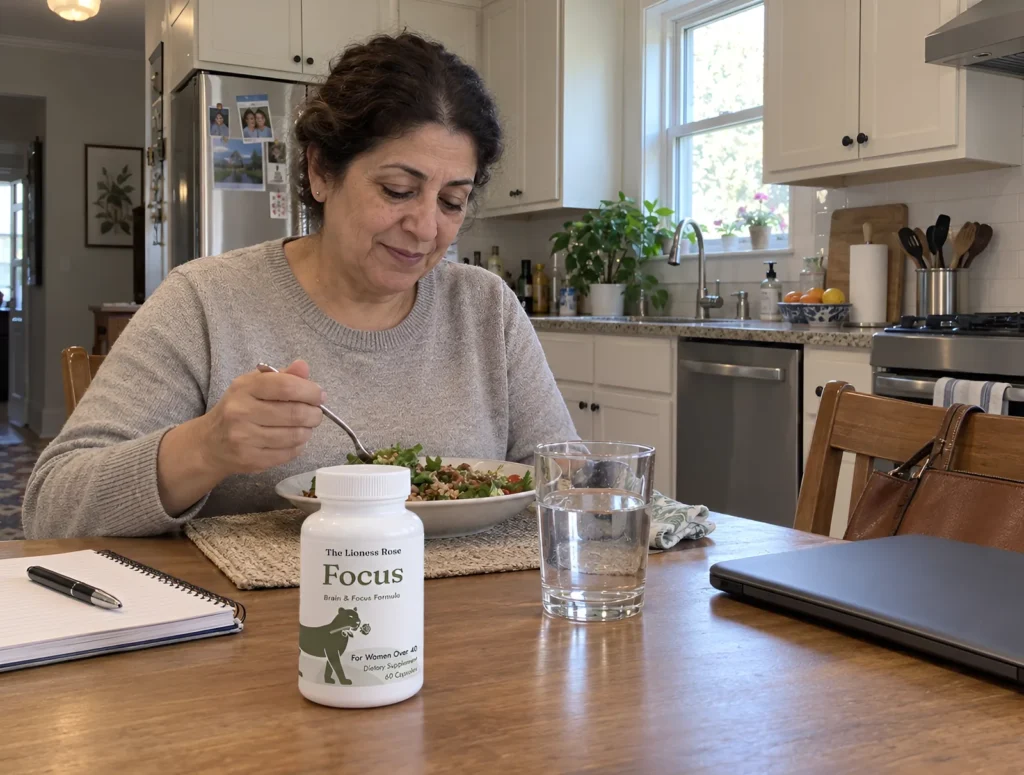
Want a daily with the vitamins and minerals in it, and something for your afternoon too? Focus is our midday formula made for women over 40. Two capsules hold 40 ingredients. That is 22 vitamins and minerals, plus a blend of 18 more, with bacopa and DHA among them. Zinc contributes to normal cognitive function. No sugar gummies. No tricks. Just two capsules before lunch, and 60 days to feel it, or it’s free.
And before you judge any pill by how you feel, get a number. Our free Focus Check takes about 2 minutes. It checks your memory and your reaction speed. Take it today, then again in a month.
Common Questions
What is the best multi-vitamin for women?
There is no best one. There is no standard multi. No standard list, either. Two bottles can hold very different amounts. If you can get pregnant, look for 400 mcg of folic acid. Then check the rest against the upper limits, and ask your doctor.
Which two vitamins should not be taken together?
Our sources do not name a pair to keep apart. They warn about totals instead. Iron, vitamin A, zinc, niacin and folic acid can climb too high. That happens when pills land on top of food with extra vitamins in it. And vitamin K needs a word with your doctor if you take a blood thinner.
What do multi vitamins do for women?
A multi raises what you get each day. It can fill a gap when your food does not. It cannot replace real food, which brings fiber and more. Most studies found little or no effect on heart disease. For cancer, the picture is not clear.
What are the top 5 vitamins a woman should take?
There is no ranked top five for everyone. The ones with real numbers are folic acid, 400 mcg a day, and iron. Iron counts most with heavy periods, or in pregnancy. Past 50, B12. In pregnancy, a prenatal covers folic acid, iron, iodine and vitamin D.
Sources
- Multivitamin/mineral Supplements, Fact Sheet for Consumers, NIH Office of Dietary Supplements
- Vitamin, Mineral, and Multivitamin Supplementation to Prevent Cardiovascular Disease and Cancer, US Preventive Services Task Force, 2022
- Folic acid, Office on Women’s Health
- Iron-deficiency anemia, Office on Women’s Health
- Vitamins, MedlinePlus, National Library of Medicine
- Dietary and Herbal Supplements, National Center for Complementary and Integrative Health